HyperTPRM: The New Model for Third-Party Risk Management (TPRM)
Third-Party Risk Management Is Broken. Here’s What Comes Next.
Most organizations believe their TPRM programs work. They don’t. Assessments take months. Coverage is partial. Teams are buried in manual work. And despite all that effort, third-party risk continues to grow. The issue isn’t effort. It’s the model.
HyperTPRM, powered by ProcessUnity, redefines how modern organizations manage third-party risk at scale.
Request a Demo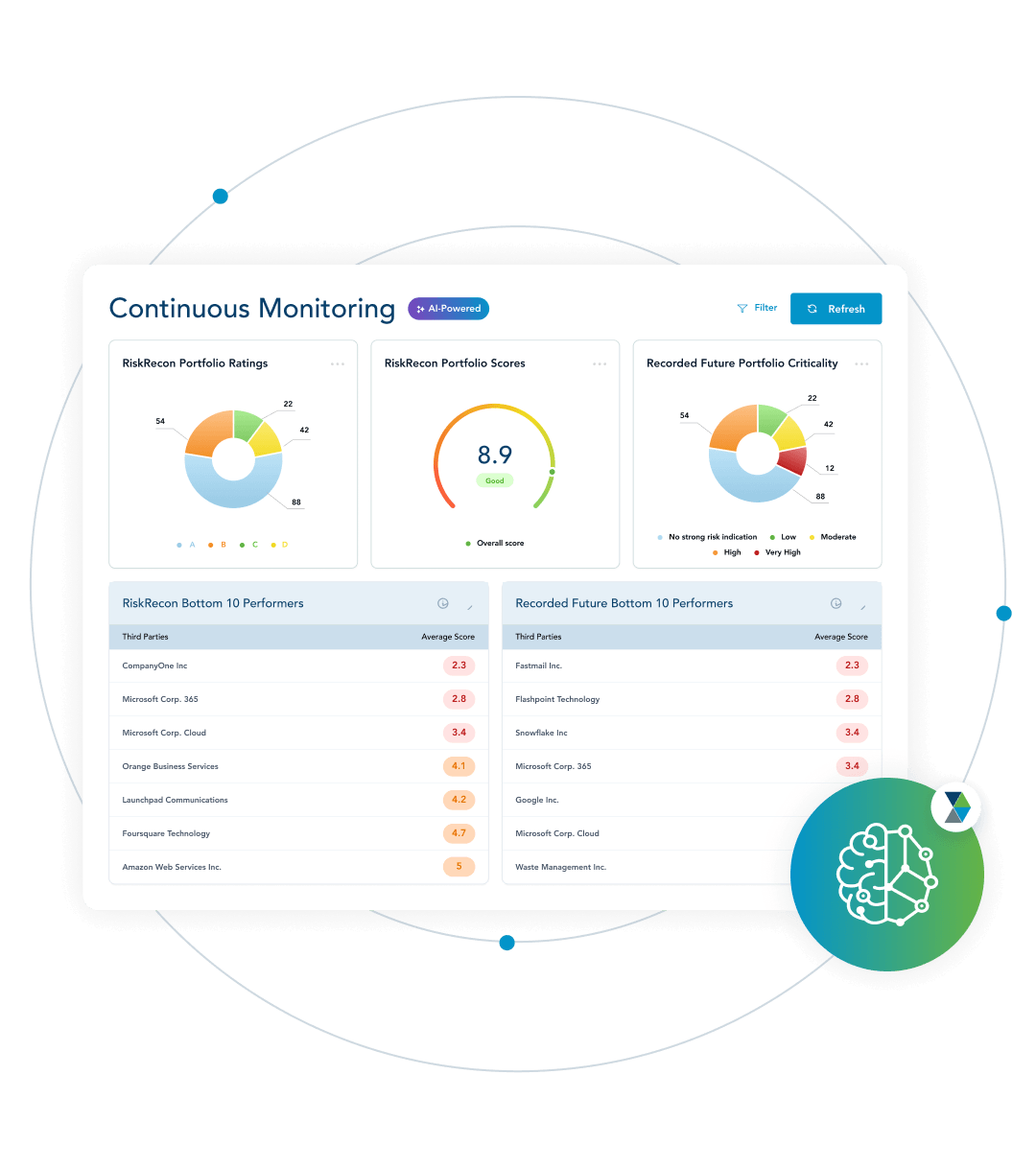
The Illusion of TPRM Maturity
On paper, many programs look solid. In reality, they’re stretched thin. Assessments often take months. Teams can only evaluate a fraction of vendors. Reviews are manual and time-consuming. And spreadsheets still play a role in critical workflows. There’s a pattern here: We think we’re mature. In reality, we’re overwhelmed.
Why Traditional TPRM Can’t Scale
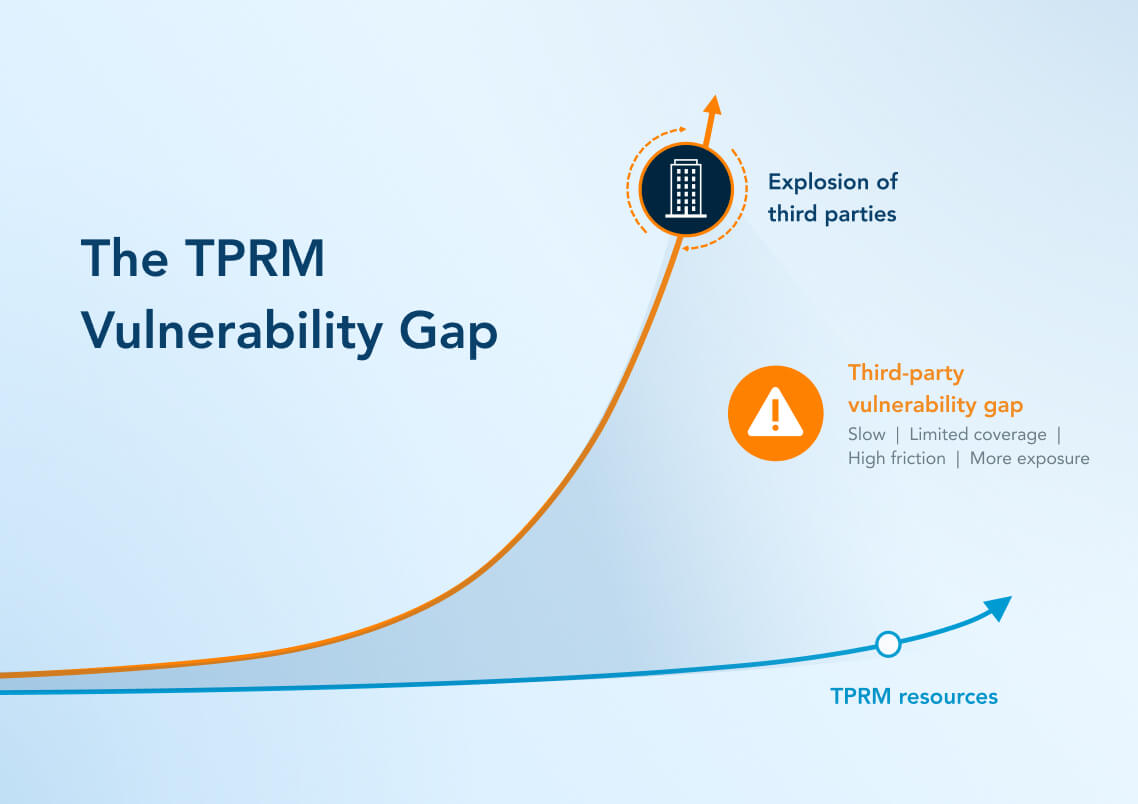
The current TPRM model was built for a different era when vendor ecosystems were smaller and data was harder to access. Today, organizations rely on vast third-party networks, and risk changes constantly. Yet most programs still rely on questionnaires as their foundation.
That creates friction. Backlogs build. Analysts burn out. Vendors disengage. And visibility remains incomplete. The deeper issue is structural. TPRM scales linearly. Risk does not.

Introducing HyperTPRM
HyperTPRM is a data-first approach to third-party risk management designed to improve visibility, accelerate assessments,
and prioritize risk intelligently. Rather than starting every assessment from scratch, HyperTPRM continuously uses data,
automation, and AI to focus effort where it matters most. With HyperTPRM, organizations can:

Start with existing risk intelligence

Apply risk
scoring upfront

Prioritize high-risk
vendors faster

Reduce manual
assessment work

Continuously monitor changing risk conditions

Scale TPRM operations without increasing headcount
How ProcessUnity Powers HyperTPRM
HyperTPRM isn’t just a concept. It’s how ProcessUnity is built. At the core are
three capabilities that enable a data-first model:
ProcessUnity Risk Index: Start with a Complete View of Risk
Most TPRM programs score vendors at the end of an assessment. ProcessUnity flips that. ProcessUnity Risk Index gives you an immediate, data-driven score for every third party before you send a single questionnaire. It combines:
- Internal control data
- External security signals
- Predictive modeling
- Context specific to your organization
- Continuous updates as risk changes
This allows you to:
- Prioritize vendors instantly
- Drive consistent decisions
- Trigger action based on real risk, not schedules

Assessment Autofill: Automate Vendor Questionnaires with AI
Traditional assessments slow everything down. ProcessUnity’s Assessment Autofill uses AI to automatically complete questionnaires using existing documentation—SOC reports, policies, prior assessments, and more.
What used to take hours can now take minutes. Vendors simply upload their documentation, and the system automatically completes the questionnaire from the submitted materials. The result:
- Faster response times
- Higher-quality data
- Less friction for vendors and your team

Evidence Evaluator:
Validate Controls at Scale
Evidence review is one of the most time-consuming aspects of vendor risk management. Evidence Evaluator uses AI to analyze documentation and validate control responses, highlighting exactly where evidence supports (or contradicts) vendor claims.
Instead of manually reviewing hundreds of pages, your team can:
- Focus on exceptions
- Validate findings faster
- Increase confidence in results

From Vendor Questionnaires to Third-Party Intelligence
Traditional TPRM asks: What should we ask this vendor?
HyperTPRM asks: What do we already know—and what actually matters?
That shift changes everything.
Instead of repeating work, you build on existing intelligence and focus effort where risk is highest.

Scale Third-Party Risk Management Without Adding Complexity
As your vendor ecosystem grows, traditional TPRM programs slow down. HyperTPRM does the opposite. With ProcessUnity:
- Data improves as your network grows
- Automation handles repetitive work
- AI accelerates analysis and validation
- Teams focus on high-impact decisions instead of administrative tasks
- Visibility across your entire portfolio
- Right-sized due diligence
- Faster vendor onboarding
- Reduced operational burden
This leads to:

What Changes for Your TPRM Team
HyperTPRM isn’t just a process improvement. It’s an operational shift.

TPRM Leaders
Gain broader visibility, reduce assessment backlogs, and improve operational scalability.

Risk Practitioners
Spend less time on manual reviews and more time analyzing meaningful risk.

Procurement Teams
Accelerate vendor onboarding and reduce delays in the procurement process.

Security Teams
Respond faster to emerging vendor risk and improve continuous monitoring coverage.
Redefining TPRM Maturity
Modern TPRM maturity is no longer defined by how many assessments your team completes. It’s defined by:
- How much of your vendor ecosystem you can see
- How quickly you can identify and respond to risk
- How effectively you adapt to change
- How efficiently your program scales over time
HyperTPRM is built around those outcomes.

Frequently Asked Questions
HyperTPRM is a modern, data-first approach to third-party risk management that prioritizes continuous risk visibility, automated analysis, and lifecycle-based decision-making over traditional questionnaire-driven processes.
Traditional TPRM programs rely heavily on manual questionnaires, spreadsheets, and point-in-time assessments. HyperTPRM uses AI, automation, continuous monitoring, and risk intelligence to prioritize effort, reduce manual work, and improve visibility across the vendor lifecycle.
Yes. HyperTPRM helps organizations reduce assessment bottlenecks by automating repetitive tasks such as questionnaire completion, evidence review, and risk scoring. This allows teams to focus on high-risk vendors instead of manually reviewing every assessment equally.
ProcessUnity Risk Index provides a real-time, data-driven score for every third party, allowing organizations to prioritize risk, reduce unnecessary assessments, and take action based on actual exposure instead of static reviews.
AI accelerates key TPRM processes such as questionnaire completion and evidence validation. It reduces manual effort while improving speed and consistency, allowing teams to scale without increasing headcount.
See HyperTPRM in Action
ProcessUnity brings together data, automation, AI, and shared intelligence to make
HyperTPRM a reality.