
The Data Problem in Third-Party Risk Management
Organizations experience an average of 12 third party-related security incidents per year—not because they lack data, but because the data they have doesn’t connect. Point-in-time assessments, lack of shared context, and misaligned timelines create a dangerous illusion: that third-party risk is understood, when in reality it’s only partially visible.
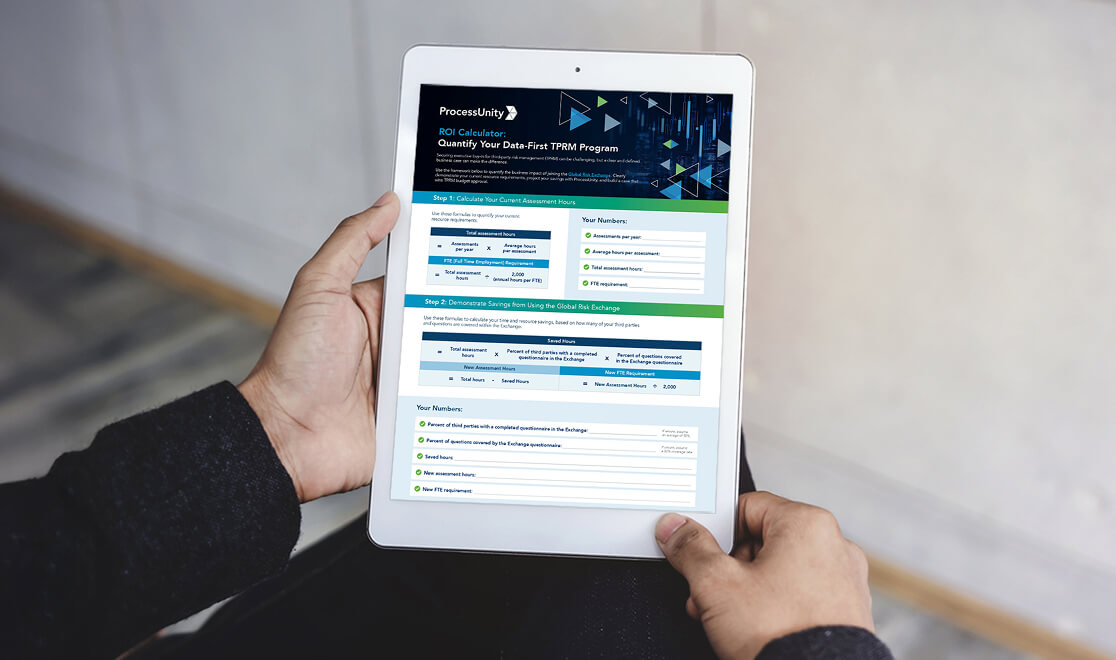
ROI Calculator: Quantify Your Data-First TPRM Business Case
Struggling to win executive approval for your third-party risk management (TPRM) program? Without defined and trusted data, it can be tough to prove the value of modernizing assessments. That’s why we created the ProcessUnity ROI Calculator.
TPRM Data Exchanges: The Key to Reducing Vendor Assessment Volume
Third-Party Risk Management (TPRM) is reaching a breaking point. As vendor ecosystems expand, business demands increase, and regulatory scrutiny intensifies, TPRM teams are being asked to do more with the same resources, widening the gap between expectations and capacity.

How ProcessUnity Risk Index Powers Action Across the Third-Party Lifecycle
Third-party risk is constantly evolving—yet 64% of large organizations report taking over four months to complete assessments. When evaluations drag on, teams are forced to make onboarding and monitoring decisions based on point-in-time data, even though risk conditions shift almost daily.

The State of Procurement: Overcoming Strategic Challenges & Driving Innovation
Procurement teams are embracing new technologies and artificial intelligence, but they still have a long way to go before reaching full maturity. Leaders feel satisfied with their core technology tools despite significant challenges, including limited budgets and a lack of strategic alignment within their organizations. The state of procurement over the next 12 months will […]
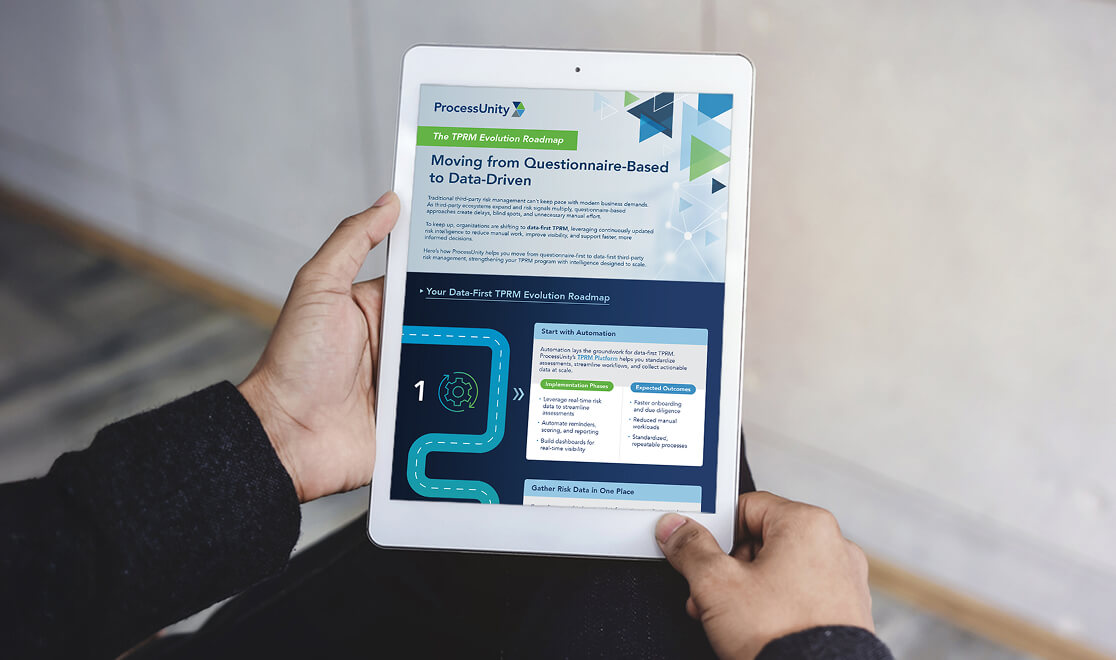
The TPRM Evolution Roadmap: Moving from Questionnaire-Based to Data-Driven
Questionnaire-first assessments were built for a simpler risk landscape. In today’s risk landscape, they slow onboarding, limit visibility, and force organizations to react to third-party risk instead of proactively managing it. This guide outlines a clear evolution from manual, questionnaire-driven assessments to data-first, AI-powered TPRM. See how ProcessUnity helps organizations modernize in structured phases, unlocking […]