Digital Operational Resilience Act (DORA) Compliance Software
ProcessUnity helps financial institutions comply with the Digital Operational Resilience Act (DORA) by managing third-party risk, preparing the Register of Information, and strengthening operational resilience across their ICT supply chain.
What is the Digital Operational Resilience Act (DORA)?
The Digital Operational Resilience Act (DORA) is an EU regulation designed to strengthen the operational resilience of financial institutions by ensuring they can withstand, respond to, and recover from ICT disruptions.
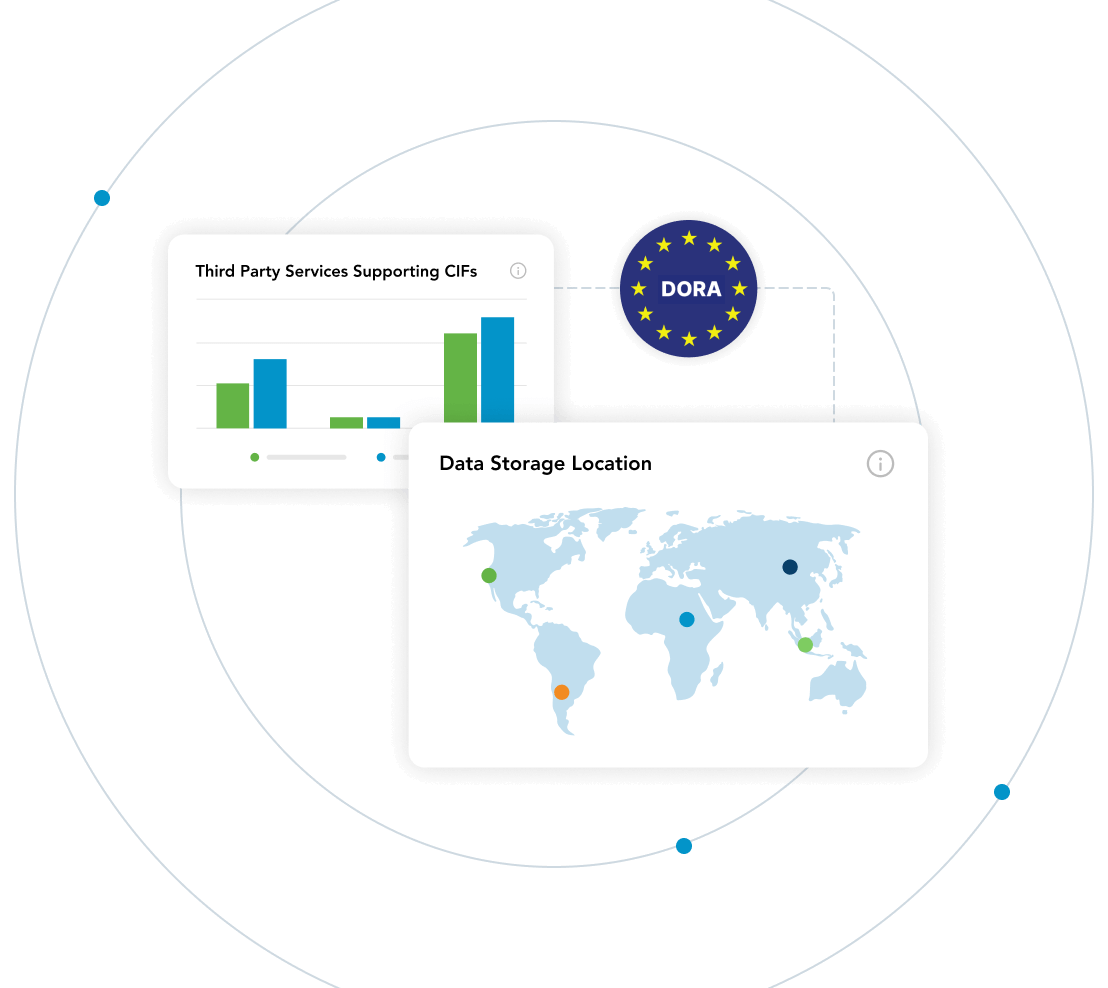
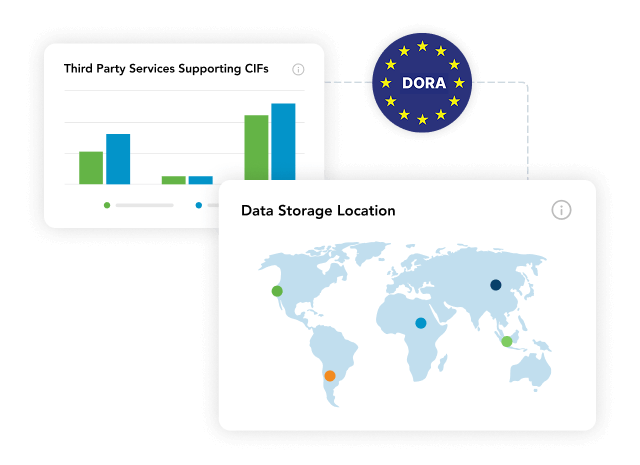
DORA establishes strict requirements for managing ICT third-party risk, including oversight of vendors, service providers, and supply chain partners that support critical or important functions.
Key DORA requirements include:
- ICT risk management
- Incident reporting
- Operational resilience testing
- ICT third-party risk management
- Maintaining a Register of Information
Organizations must demonstrate that they have visibility into third-party relationships and the ability to manage operational disruptions across their ecosystem.
Why DORA Compliance Matters
Financial institutions rely heavily on external technology providers to support critical operations. Disruptions caused by vendors, cyber incidents, or infrastructure failures can have widespread consequences.
DORA requires organizations to strengthen oversight of ICT vendors and maintain detailed documentation of third-party relationships that support critical operations.
Organizations must be able to:
- Identify vendors supporting critical or important functions (CIFs)
- Maintain a complete Register of Information
- Assess ICT vendor risk
- Document vendor exit strategies
- Demonstrate operational resilience during audits
Without centralized vendor data management, meeting these requirements can become complex and time-consuming.
DORA Third-Party Risk Management Requirements
The Digital Operational Resilience Act introduces strict requirements for managing ICT third-party risk across financial institutions and their technology supply chains.
Organizations must establish processes to identify, assess, monitor, and manage risks associated with technology providers supporting Critical or Important Functions (CIFs).
Key DORA third-party risk management requirements include:
- Maintaining a DORA Register of Information for ICT service providers
- Identifying vendors supporting Critical or Important Functions (CIFs)
- Conducting risk assessments of ICT service providers
- Monitoring subcontractors and fourth-party dependencies
- Documenting exit strategies and substitutability plans
- Maintaining oversight of intragroup ICT service providers
Financial institutions must demonstrate visibility into their vendor ecosystem and the ability to manage operational disruptions caused by third-party providers.
How ProcessUnity Simplifies DORA Compliance
ProcessUnity provides a centralized platform to manage vendor data, automate risk assessments, and prepare regulatory reporting required for DORA.
Organizations can:
- Collect vendor and legal entity data through automated assessments
- Populate the DORA Register of Information
- Risk-rank vendors supporting Critical or Important Functions
- Map intragroup and fourth-party relationships
- Export Register of Information data for regulatory submissions
This centralized approach helps organizations reduce manual effort while strengthening oversight of ICT vendors.
Automate Data Preparation and Export for the Register of Information
Preparing and maintaining the DORA Register of Information is one of the most complex requirements of the regulation.
ProcessUnity simplifies this process by collecting vendor data from multiple sources, including:
- Third-party records
- Service relationships
- Contracts and agreements
- Fourth-party dependencies
- Intra-company vendor relationships
Organizations can export the Register of Information with a single click for regulatory reporting and submissions.

Best Practices Guide
Complete DORA Guide: Key Provisions and Best Practices
Key Benefits
Reduce Compliance Effort
Automate vendor data collection and risk assessments required for DORA compliance.

Simplify Regulatory Reporting
Prepare and export Register of Information data quickly and accurately.

Establish a Repeatable Compliance Program
Create a consistent, auditable approach to managing ICT vendor risk.

Strengthen Third-Party Risk Management
Maintain centralized visibility into vendors supporting critical operations.
Key Platform Capabilities for DORA Compliance
ProcessUnity’s DORA compliance solution is built on a centralized data model designed to manage complex ICT vendor ecosystems and support DORA Register of Information reporting.
Centralized Data Model
ProcessUnity provides a structured data model that connects vendors, services, and legal entities across your organization.
- Intragroup Mapping [CW7] [SC8]
- Third-Party Master
- Fourth-Party Mapping
- Business Owners
- Legal Entity
- Register of Information
- Services
- Service Add-On
- Critical or Important Functions
- Legal Entity Contact
This centralized structure allows organizations to maintain visibility into vendor relationships and dependencies across business units.
Standardized Third-Party Risk Management
ProcessUnity standardizes third-party risk management workflows to support DORA compliance.
Key capabilities include:
- Automated Assessment Engine
- Register of Information Reporting
- Data Collection for Register of Information Reporting
- Data Export for Register of Information Preparation
These capabilities help organizations collect vendor information, maintain accurate records, and prepare regulatory submissions efficiently.
Achieve DORA Compliance with ProcessUnity
Ready to meet the requirements of the Digital Operational Resilience Act (DORA)?
ProcessUnity provides the automation, intelligence, and scalability organizations need to simplify regulatory compliance. By centralizing vendor data, automating risk assessments, and streamlining Register of Information reporting, organizations can strengthen operational resilience and build a sustainable third-party risk management program.
Frequently Asked Questions
The Digital Operational Resilience Act (DORA) is a European Union regulation designed to strengthen the operational resilience of financial institutions. The regulation establishes requirements for managing ICT risk, overseeing technology service providers, reporting incidents, and ensuring organizations can withstand and recover from disruptions across their digital infrastructure and third-party ecosystem.
DORA applies to financial institutions operating within the European Union, including banks, investment firms, insurance companies, payment institutions, and other regulated financial entities. These organizations must implement risk management processes, maintain oversight of ICT third-party service providers, and demonstrate operational resilience across the technology systems that support critical business functions.
The DORA Register of Information is a regulatory requirement that requires financial institutions to maintain a detailed inventory of their ICT third-party service providers. The register documents vendor relationships, services provided, critical or important functions supported, and subcontracting arrangements. Regulators use this information to assess third-party risk exposure and operational dependencies.
DORA introduces stricter requirements for managing ICT third-party risk. Financial institutions must assess vendor risk, monitor subcontractors and fourth-party relationships, maintain visibility into providers supporting critical functions, and document exit strategies for key vendors. These requirements ensure organizations can manage disruptions caused by third-party technology providers.
Organizations can achieve DORA compliance by implementing structured processes to manage ICT risk, assess and monitor third-party service providers, maintain the DORA Register of Information, and establish operational resilience procedures. Many organizations use third-party risk management platforms to automate vendor assessments, centralize vendor data, and simplify regulatory reporting.
Next Steps:
Schedule a ProcessUnity TPRM Demo
Contact us today to learn how ProcessUnity can help you simplify DORA compliance and
strengthen operational resilience.