Faster Cycle Times
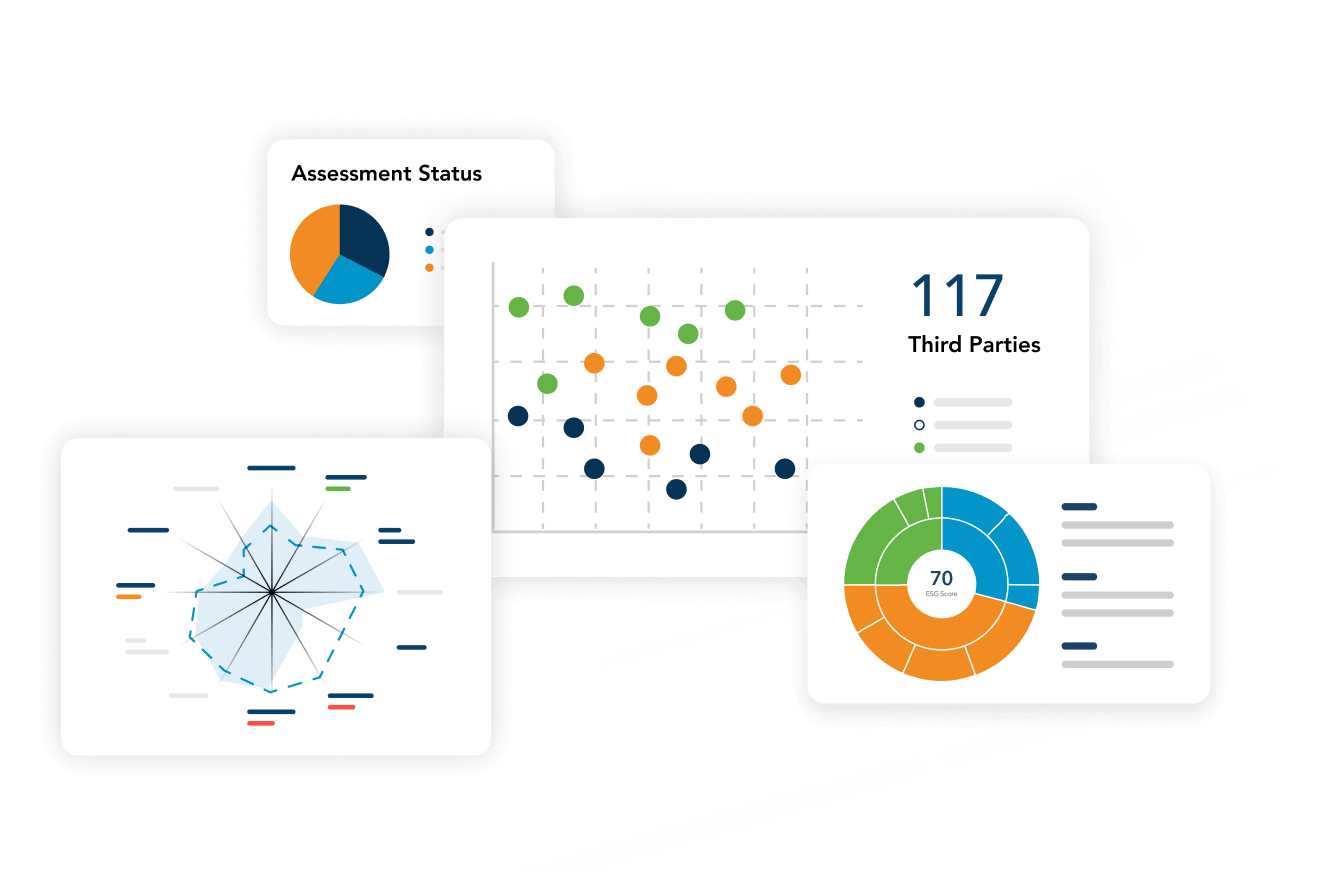
ProcessUnity Risk Index scores and built-in domain coverage mean less time chasing questionnaires and more time acting on results.
ProcessUnity provides complete risk domain coverage from a single platform. Leverage out-of-the-box assessment, scoring, and monitoring workflows for cybersecurity, AI, privacy, and resiliency, then add more domains with our pre-built connectors and bring-your-own-data integrations.
Request a Demo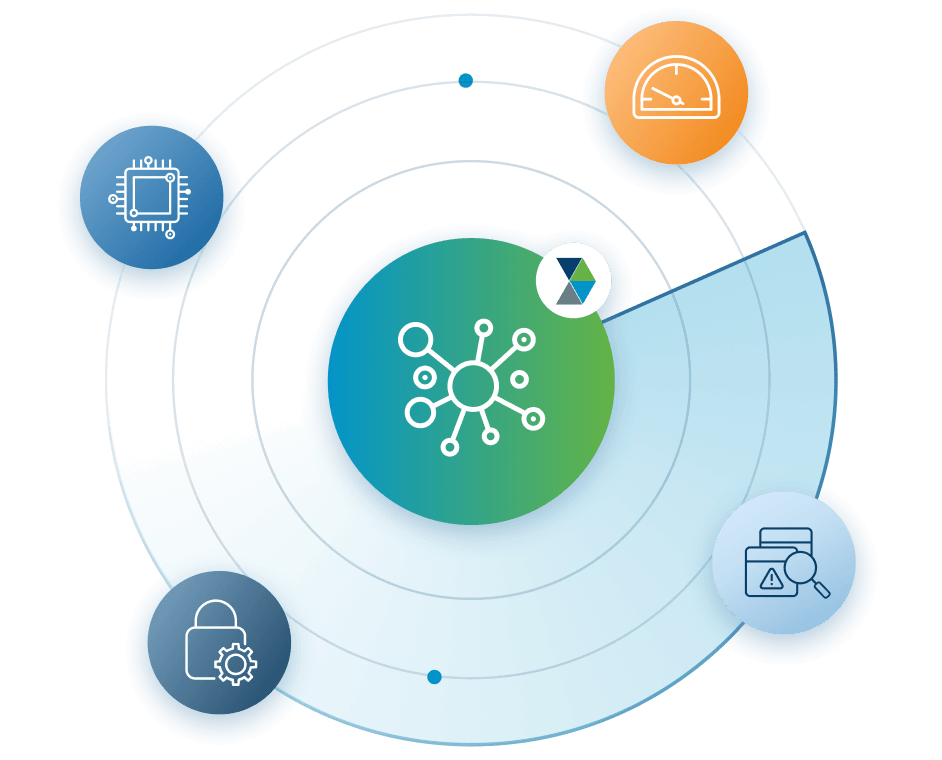
A third-party risk domain is a category of risk a vendor can introduce — cybersecurity, AI, privacy, operational resiliency, financial health, reputation, and others.
Most programs manage several domains at once, but most TPRM tools only handle a few. ProcessUnity covers the Cybersecurity, AI, Privacy, and Resiliency domains from day one, then handles every other domain through pre-built connectors and our Connect-Anything integration framework.
Third-party risk rarely comes from a single source. One vendor can expose your organization across several domains at once. A SaaS provider might carry security exposure, process regulated personal data, train models on your inputs, and be a single point of failure in your operations. When each domain lives in a separate tool or spreadsheet, your view fragments and decisions slow down. A mature TPRM program handles every relevant domain in one place.

Blog
ProcessUnity delivers native, day-one coverage for the four domains most programs prioritize:

A vendor’s security posture, controls, and external attack surface.

Handling of regulated and personal data against privacy obligations.

Operational continuity and a vendor’s ability to withstand disruption.

How third parties build, deploy, and govern AI, including model and data-use exposure.
Assessment starts with the Global Risk Exchange questionnaire, which captures a third party’s attested answers across these domains. Those responses are combined with perimeter scans from RiskRecon and threat and vulnerability intelligence from Recorded Future to produce the ProcessUnity Risk Index — a single, defensible score that blends vendor control data with externally observed evidence. Controls are pre-mapped to industry frameworks, and each domain is scored relative to your relationship with that vendor inside the ProcessUnity TPRM Platform. As a result, you see exactly where a third party stands in every area.

The four core domains are just the start. Through our Connect-Anything framework, ProcessUnity extends into any risk domain your program needs by bringing external data and content directly into your workflows and scoring.
Pre-built, expert-managed connectors cover 40+ risk data providers across domains including:

If a domain or data source isn’t on the list, you’re not stuck. ProcessUnity’s Connect-Anything integration framework supports a bring-your-own-data model. Using flexible and secure APIs, ProcessUnity can integrate additional data feeds, content subscriptions, and internal systems so any risk domain feeds the same assessments, scoring, and monitoring as everything else.

Depth in a single domain alone doesn’t help you achieve full coverage,
but managing multi-risk domain data
outside of your program can become
untenable. Out-of-the-box coverage gets you running on the risks that
matter most, while Connect-Anything integration means new or emerging
domains plug into the same platform
instead of forcing another point
tool.
| Risk Domain | How It’s Covered | What Powers It | How It’s Scored |
|---|---|---|---|
| Cybersecurity (includes AI) | Out of the box | Global Risk Exchange questionnaire + RiskRecon perimeter scans + Recorded Future threat intel | Risk Index + per-domain score |
| Privacy | Out of the box | Global Risk Exchange questionnaire, controls mapped to frameworks | Per-domain score in the TPRM Platform |
| Resiliency | Out of the box | Global Risk Exchange questionnaire, controls mapped to frameworks | Per-domain score in the TPRM Platform |
| Financial health | Pre-built connector | RapidRatings, Dun & Bradstreet | Integrated into workflows & scoring |
| Sanctions / PEP / adverse media | Pre-built connector | LSEG (Refinitiv World-Check) | Integrated into workflows & scoring |
| ESG & sustainability | Pre-built connector | EcoVadis | Integrated into workflows & scoring |
| Supply-chain resiliency | Pre-built connector | Interos | Integrated into workflows & scoring |
| Identity / beneficial ownership | Pre-built connector | Dun & Bradstreet, LSEG | Integrated into workflows & scoring |
| Any other domain | Connect-Anything (API) | Bring-your-own data feeds & content subscriptions | Integrated into workflows & scoring |
Plenty of tools can assess a vendor in one or two domains. The difference
with ProcessUnity is what full coverage on
a single platform does for
your program:
ProcessUnity Risk Index scores and built-in domain coverage mean less time chasing questionnaires and more time acting on results.
Start with independent evidence — perimeter scans, threat intelligence, connector data — and use targeted questionnaires to fill the gaps, instead of the other way around.
Risk Index scores combined with observed data across every domain surfaces exposure that single-domain tools and standalone questionnaires miss.
Domain coverage, scoring, connectors, and workflows run on one platform — not a bolt-on or a separate purchase.
The most common third-party risk domains are cybersecurity, AI, privacy, and operational resiliency, along with financial health, reputation, ESG, and compliance/regulatory risk (including ABAC and sanctions). A single vendor often carries risk across several domains at once, which is why leading programs assess and monitor each domain from one platform. ProcessUnity covers cybersecurity, AI, privacy, and resiliency out of the box and every other domain through pre-built connectors.
There’s no fixed number — a program should cover every domain relevant to its vendors and regulatory obligations. For most organizations that means cybersecurity, AI, privacy, and resiliency at minimum, plus financial, reputational, and ESG risk for critical suppliers. The goal is complete coverage without a separate tool per domain. Historically, cybersecurity has been the most heavily scrutinized, but AI, privacy, resiliency, financial, ESG, geopolitical and compliance/regulatory are becoming more important to TPRM teams.
The most reliable multi-domain scoring starts with controls intelligence: modeling a vendor’s control posture from external signals, its technology profile, and how similar organizations perform. ProcessUnity’s Risk Index takes this approach, weighting controls intelligence as the dominant input alongside perimeter scanning and threat intelligence, so every vendor gets a complete score across each risk domain from day one — no questionnaire to wait on. When vendors attest to their controls through the Global Risk Exchange, that evidence calibrates the score further.
Yes — if the platform supports external integrations. ProcessUnity’s Connect-Anything framework uses pre-built connectors for 40+ data providers and a bring-your-own-data API model, so any additional domain or data source feeds the same assessments, scoring, and monitoring as native domains.
Out-of-the-box coverage works on day one with no custom setup — questionnaire content, framework-mapped controls, and scoring are already built in. Connector-based coverage brings in external data providers for specialized domains like financial health or sanctions screening. ProcessUnity offers both, so programs get immediate value and unlimited breadth.
Your strongest analyst shouldn’t spend Tuesday morning cross-referencing SOC 2 exceptions by hand. But that’s where...
Third-Party Risk Management (TPRM) teams have never had more trouble collecting information about their vendors. On...

When the UK’s financial regulators finalised their new third-party reporting rules, they did something regulators rarely...

When the Prudential Regulation Authority published PS7/26, most third-party risk teams filed it under “reporting requirements”...

This panel webinar brings three perspectives together to talk through how to close that gap. Giles...

An intake queue that quietly hides a duplicate vendor for four days. A SOC 2 report...
Every week without ProcessUnity is another week of manual processes, growing backlogs, and blind spots in your vendor portfolio.
Request a DemoNo commitment required.