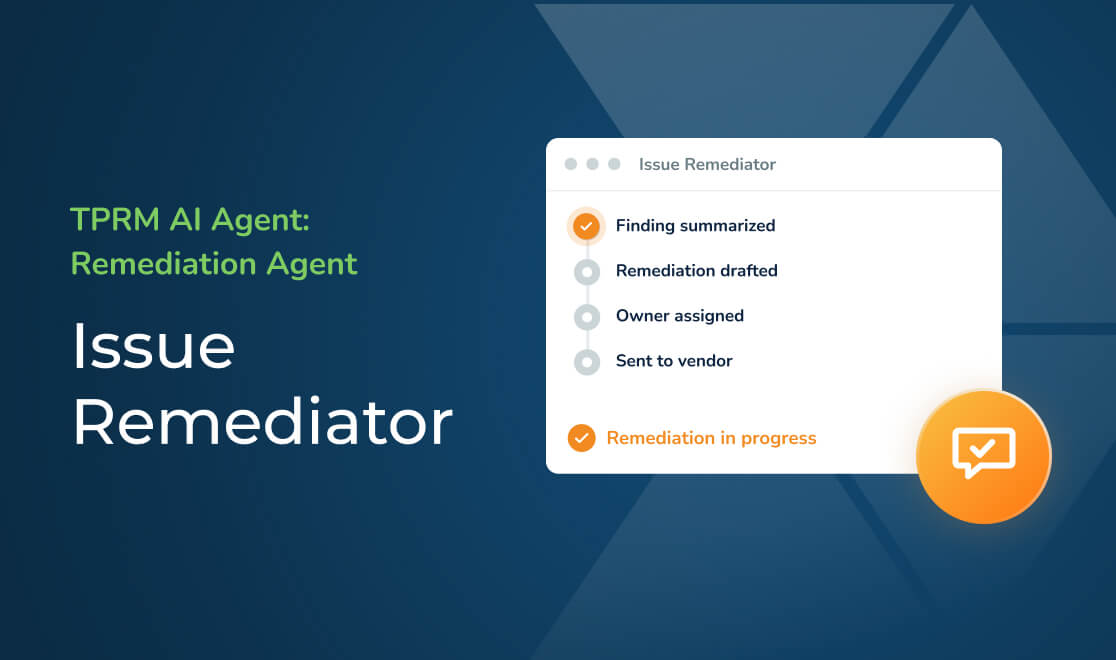
TPRM AI Agent: Issue Remediator
Writing clear remediation instructions takes time. When language varies by analyst or leaves requirements open to interpretation, vendors may challenge the request instead of addressing the issue, further delaying remediation and leaving issues unresolved.
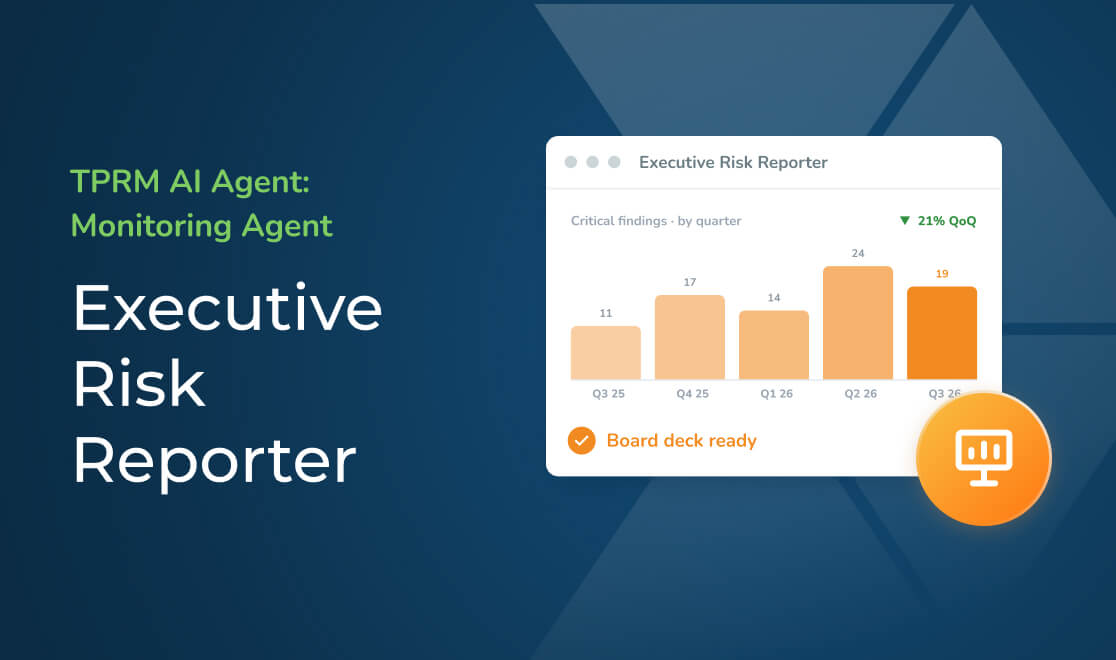
TPRM AI Agent: Executive Risk Reporter
When leadership asks for a clear view of vendor risk, it can take analysts hours to assemble information from a sprawling record. Inconsistent formats and narratives make it difficult to compare vendors or present a coherent picture of portfolio risk.
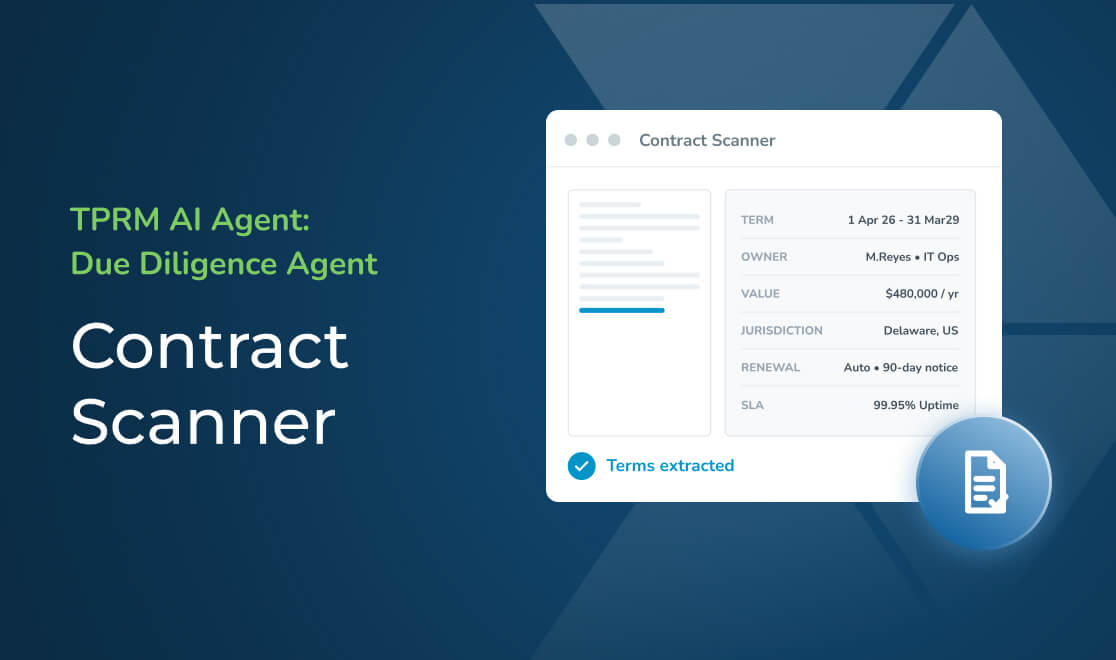
TPRM AI Agent: Contract Scanner
Executed contracts often span dozens of pages, with critical terms scattered throughout the agreement. When dates, renewal conditions, service levels, and other details are retyped manually, information gets missed, vendor records remain incomplete, and renewal windows can close unnoticed.
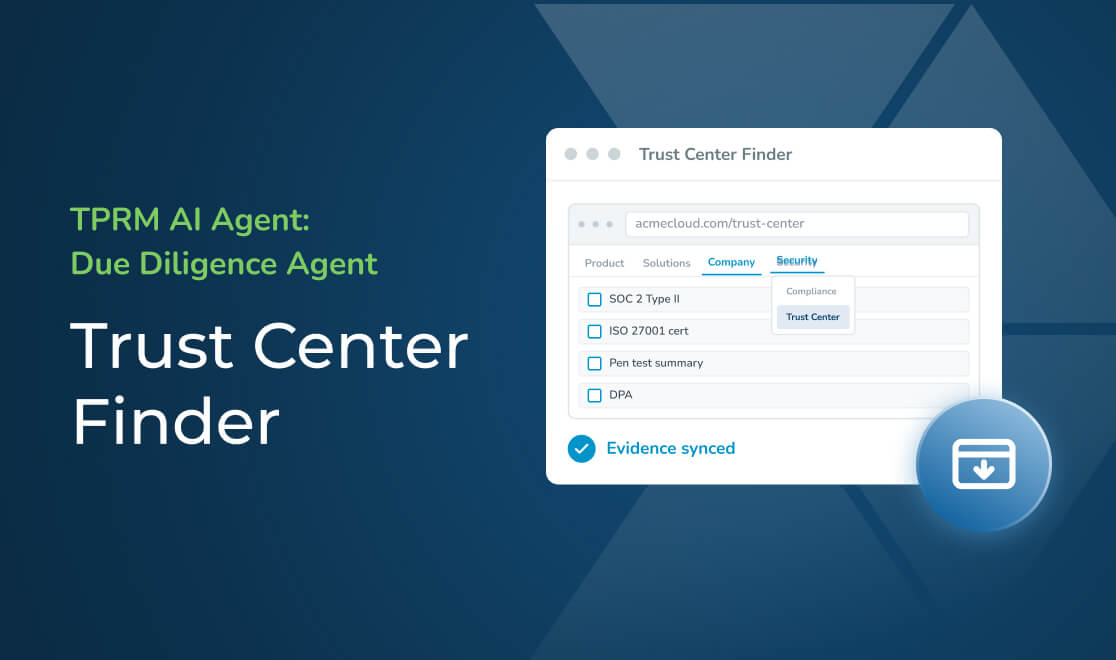
TPRM AI Agent: Trust Center Finder
Teams often request documents that vendors already publish in their trust centers. The resulting email exchanges add days to assessments, create unnecessary questionnaire cycles, and frustrate both the vendor and your internal team.
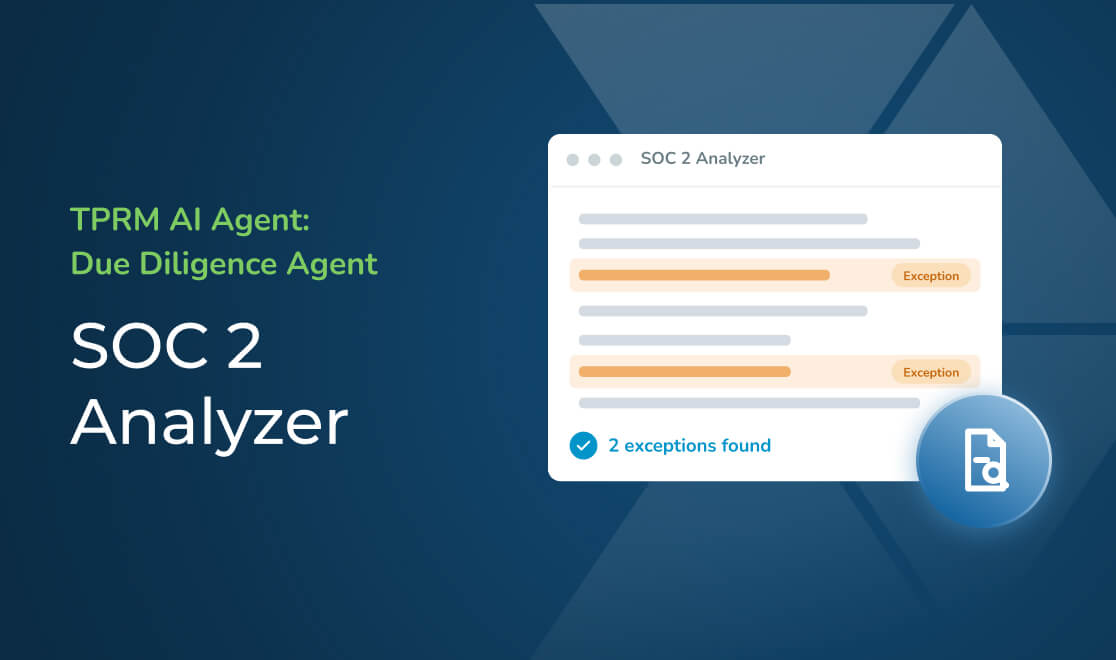
TPRM AI Agent: SOC 2 Analyzer
SOC 2 reports can run 80 to 120 pages long, with critical details often buried beyond the opinion letter. Under queue pressure, analysts may miss exceptions, complementary user entity controls, and other findings that affect your organization’s obligations.
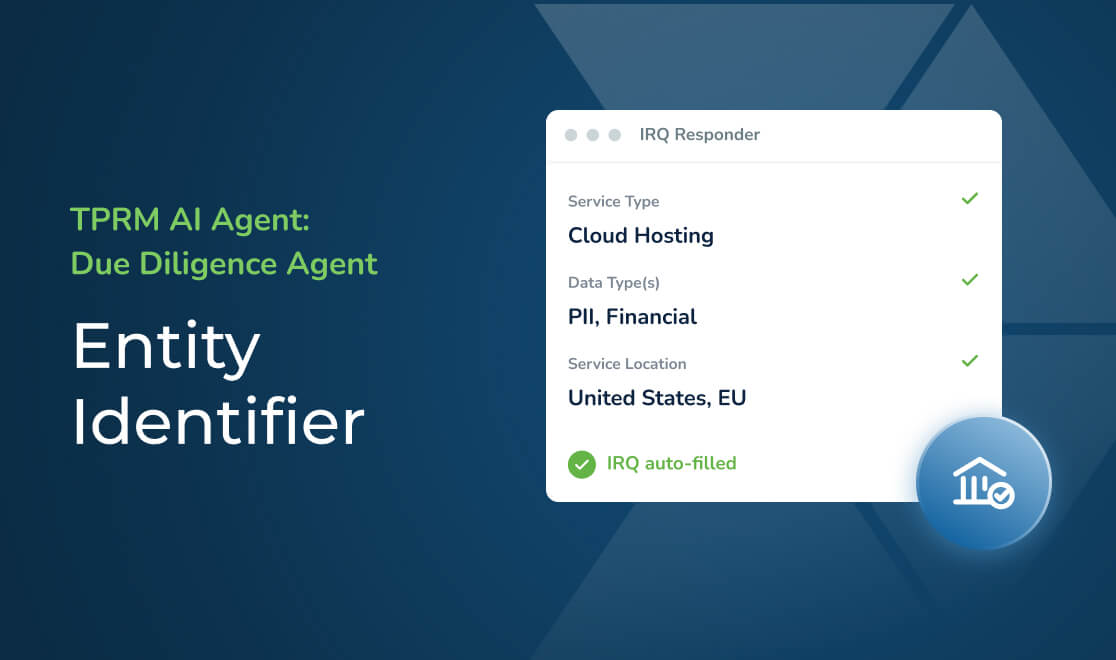
TPRM AI Agent: Entity Identifier
Similar vendor names, shared parent companies, and regional subsidiaries can make it difficult to confirm who your organization is actually doing business with. As a result, teams may assess one entity, contract with another, and discover the mismatch only during an audit or incident.