Third-Party Risk Management (TPRM): The Complete Guide
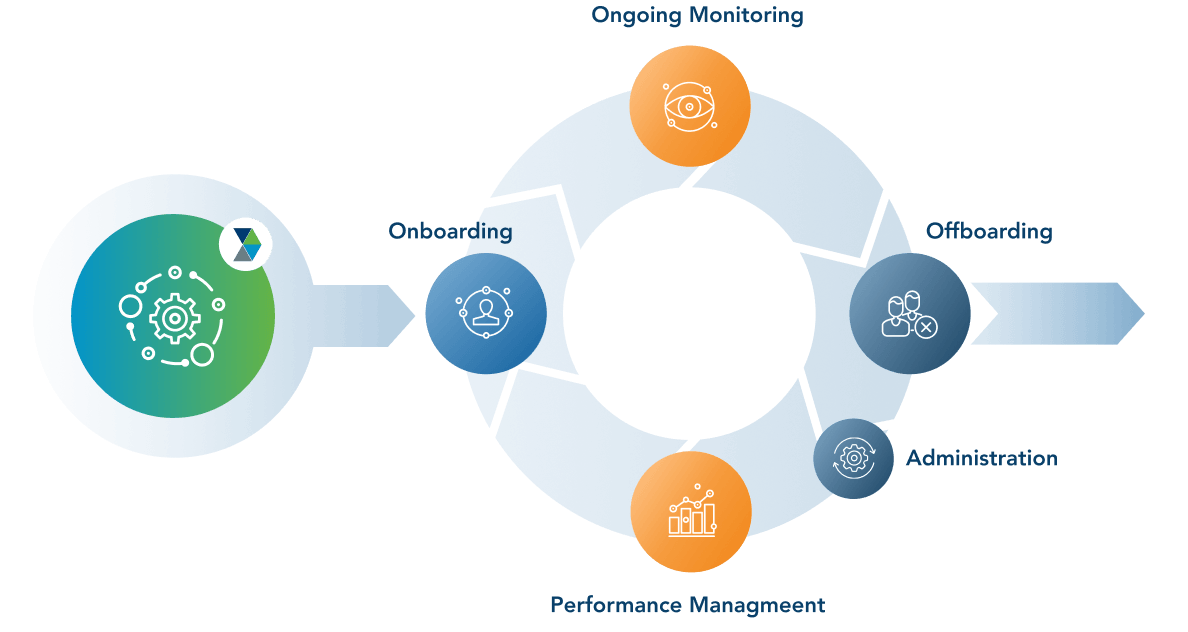
Third-party risk management (TPRM) has evolved from a procurement and compliance function into a critical operational resilience and cybersecurity priority.
Modern organizations depend on an increasingly complex ecosystem of vendors, suppliers, service providers, cloud platforms, contractors, and technology partners to support day-to-day operations. From SaaS applications and outsourced business services to payment processors and infrastructure providers, third parties now sit at the center of how organizations operate and scale. That dependency has created a new level of operational and cybersecurity exposure.
A single third-party incident can disrupt critical business services, expose sensitive data, trigger regulatory scrutiny, and damage customer trust.
As vendor ecosystems continue to expand, many organizations find that traditional vendor oversight processes built around spreadsheets, email-based reviews, and disconnected systems are no longer sustainable.
Risk teams are now expected to:
- Assess more vendors faster
- Reduce onboarding delays
- Improve operational resilience
- Continuously monitor vendor risk
- Support evolving regulatory requirements
- Reduce assessment fatigue
- Improve visibility across the vendor lifecycle
At the same time, organizations are under pressure to modernize how they manage third-party risk without creating additional operational complexity or adding headcount.
This shift is driving a broader transformation within TPRM programs. Organizations are increasingly moving toward centralized, intelligence-driven approaches that combine workflow automation, continuous monitoring, AI-assisted assessments, and integrated risk visibility to improve scalability and reduce manual effort.
What Is Third-Party Risk Management?
Third-party risk management is the process of identifying, assessing, monitoring, and managing the risks introduced by external vendors, suppliers, contractors, partners, and service providers.
Organizations increasingly depend on third parties to support cloud infrastructure, SaaS applications, IT operations, customer support, payment processing, and critical business services. While these relationships improve operational efficiency and scalability, they can also introduce cybersecurity, operational, compliance, financial, and reputational risk.
An effective TPRM program helps organizations:
- Understand vendor risk exposure
- Assess vendor security and compliance posture
- Prioritize high-risk vendors
- Standardize due diligence processes
- Improve operational resilience
- Track remediation activities
- Maintain ongoing visibility into vendor risk
Modern TPRM programs extend far beyond onboarding and annual assessments. Vendor risk conditions can change rapidly due to cybersecurity incidents, operational disruptions, financial instability, or evolving regulatory requirements.
As a result, organizations increasingly need continuous oversight across the entire vendor lifecycle.
Why Third-Party Risk Management Is Important
Third-party relationships are deeply embedded into modern business operations.
Many organizations now depend on hundreds — or even thousands — of external vendors to support critical services, technologies, infrastructure, and customer experiences. As those ecosystems expand, the potential impact of vendor-related incidents continues to grow.
Cybersecurity breaches involving third parties have become increasingly common. At the same time, operational resilience regulations are placing greater emphasis on understanding vendor dependencies, monitoring critical service providers, and maintaining continuity during disruptions.
The challenge is that many organizations are trying to manage modern vendor ecosystems using outdated processes.
Spreadsheet-driven assessments, email-based evidence collection, fragmented workflows, and inconsistent review processes often create operational bottlenecks that make it difficult to scale vendor oversight effectively.
Common challenges include:
- Assessment backlogs
- Manual evidence reviews
- Limited visibility into vendor risk
- Vendor fatigue
- Slow onboarding timelines
- Inconsistent risk scoring
- Gaps in continuous monitoring
These inefficiencies create friction not only for risk teams, but also for procurement, security, compliance, legal, and business stakeholders who rely on vendors to support operational objectives.
As regulatory expectations continue to evolve, organizations increasingly need more centralized and scalable approaches to third-party risk management that improve visibility, reduce operational burden, and support continuous oversight.
These numbers aren't abstract. The 2020 SolarWinds breach remains the clearest illustration of how a single compromised vendor can cascade into a crisis affecting thousands of downstream organizations, including multiple U.S. federal agencies — not because those agencies were directly attacked, but because they trusted a third party whose own security posture they hadn't adequately assessed. Around the same time, the COVID-19 pandemic exposed a different kind of third-party fragility: global supply chain disruptions that had nothing to do with cybersecurity but everything to do with over-reliance on vendors whose resilience had never been stress-tested. Together, these events reframed third-party risk for many organizations — from a compliance exercise into a board-level business continuity issue.
The State of Third-Party Risk Management
Third-party risk management programs are under increasing pressure to scale faster, improve visibility, and reduce operational bottlenecks across growing vendor ecosystems. At the same time, organizations are managing more vendors, more assessments, and more operational dependencies than ever before.
Yet many organizations still struggle to operationalize effective vendor oversight at scale.
According to the 2026 State of Third-Party Risk Assessments survey (ProcessUnity), organizations report experiencing an average of 12 third-party breaches per year, reinforcing that third-party risk has become a recurring operational challenge rather than an isolated event.
The research also highlights a growing disconnect between perceived program maturity and measurable operational outcomes. While many organizations believe their TPRM programs are mature, the underlying data shows persistent challenges around assessment timelines, operational scalability, remediation, and continuous monitoring.
Traditional assessment processes continue to create significant operational drag across many organizations. The report found that 64% of large organizations require more than four months to complete a third-party assessment.
In practice, these extended timelines can delay onboarding decisions, slow procurement cycles, and create gaps between identifying risk and acting on it.
The operational burden associated with vendor assessments is also substantial. According to the report, 63% of organizations require more than 40 hours of internal team effort to complete a single third-party assessment, while 28% require more than 160 hours.
Despite growing investment in TPRM programs, many organizations still rely heavily on manual workflows. In fact, 64% of organizations surveyed reported continuing to use spreadsheets as part of their assessment process.
Vendor responsiveness also continues to be a major operational challenge. Many organizations report waiting four months or longer for vendor responses to assessments, and a significant percentage of vendors never respond at all.
As a result, organizations are often forced to prioritize only a portion of their vendor ecosystem. On average, organizations assess only 36% of their third-party population.
These operational challenges are driving increased interest in automation and AI-assisted assessments. The report found that 44% of organizations currently use AI within their TPRM programs, while another 37% plan to adopt AI capabilities in the future.
This shift reflects a broader evolution happening across the market. Organizations are moving beyond fragmented, assessment-heavy approaches toward more intelligence-driven programs that combine:
- Workflow automation
- Continuous monitoring
- Centralized vendor intelligence
- AI-assisted evidence analysis
- Risk prioritization
- Operational resilience oversight
To scale oversight across larger vendor ecosystems, many organizations adopt centralized TPRM platforms to reduce manual work, improve visibility into vendor risk, and support consistent governance across the vendor lifecycle.
Types of Third-Party Risk
Third-party risk can take many forms depending on the vendor relationship, services provided, and level of access to systems or sensitive data.
Understanding the different categories of vendor risk helps organizations prioritize oversight efforts and apply more effective governance across the vendor lifecycle.

Cybersecurity Risk
Cybersecurity risk remains one of the primary drivers behind modern TPRM programs.
Third parties may introduce vulnerabilities through weak security controls, insecure software, poor access management practices, unpatched systems, or inadequate data protection measures.
As organizations become more interconnected through cloud platforms, APIs, and shared infrastructure, cybersecurity incidents involving third parties can spread rapidly across environments.
Many organizations now evaluate vendor cybersecurity posture through:
- Security questionnaires
- Evidence reviews
- External intelligence sources
- Continuous monitoring tools
- Security ratings services
Modern TPRM programs increasingly combine assessments with ongoing monitoring to improve visibility into evolving cyber risk conditions.

Operational Risk
Operational risk occurs when vendor failures disrupt critical business services or daily operations.
Examples may include:
- System outages
- Service disruptions
- Infrastructure failures
- Business continuity gaps
- Supply chain interruptions
- Staffing shortages
Operational resilience initiatives have increased the importance of understanding vendor dependencies and identifying which third parties support critical operational functions.
Organizations increasingly need visibility into:
- Critical service providers
- Recovery dependencies
- Single points of failure
- Concentration risk
- Vendor resiliency capabilities

Compliance Risk
Organizations are increasingly expected to ensure vendors comply with relevant regulations, contractual obligations, and industry frameworks.
Compliance-related concerns may involve:
- Data privacy requirements
- Financial regulations
- Security standards
- Industry-specific mandates
- Operational resilience obligations
Vendor compliance failures can expose organizations to regulatory penalties, audit findings, legal exposure, and reputational damage.
As regulatory expectations continue to evolve globally, organizations increasingly need centralized approaches to documenting vendor oversight activities and demonstrating governance consistency.

Financial Risk
Financial instability within a vendor organization can create operational disruption and long-term business continuity concerns.
Many organizations evaluate:
- Financial performance
- Liquidity
- Creditworthiness
- Bankruptcy exposure
- Long-term viability
This becomes especially important when vendors support critical operational infrastructure or customer-facing services.
Financial oversight is increasingly being integrated into broader continuous monitoring programs to help organizations identify emerging concerns earlier.

Reputational Risk
Third-party incidents can significantly impact customer trust and brand reputation.
Examples may include:
- Public data breaches
- Regulatory violations
- Ethical misconduct
- Service outages
- Negative media exposure
As customers and regulators place greater scrutiny on vendor ecosystems, reputational exposure associated with third parties continues to grow.
Organizations increasingly recognize that vendor incidents can quickly become enterprise reputation events.

Fourth-Party Risk
Fourth-party risk refers to the vendors and subcontractors used by your third parties.
Organizations increasingly need visibility into:
- Downstream service providers
- Supply chain dependencies
- Subcontractor relationships
- Extended vendor ecosystems
Operational resilience initiatives have increased focus on understanding not just direct vendors, but also the broader network of providers supporting critical services.

Concentration Risk
Concentration risk occurs when organizations become overly dependent on a small number of vendors, cloud providers, technologies, or geographic regions.
Overreliance on a single provider can create operational vulnerabilities if that vendor experiences outages, cybersecurity incidents, financial instability, geopolitical disruption, or supply chain failures.
As organizations consolidate technology providers and cloud infrastructure, concentration risk continues to become a larger area of focus within TPRM programs.
Common Third-Party Risk Management Challenges
As vendor ecosystems continue to expand, many organizations struggle to scale TPRM programs effectively.
Traditional vendor oversight processes are often fragmented across procurement, information security, legal, compliance, privacy, and operational risk teams. This can create operational inefficiencies, inconsistent assessments, and limited visibility into overall vendor risk exposure.
Manual Processes & Spreadsheet-Driven Workflows
Many organizations still manage third-party risk assessments using spreadsheets, email threads, shared folders, and disconnected systems.
While these approaches may work initially, they quickly become difficult to scale as vendor volumes increase.
Manual workflows often create:
- Inconsistent assessments
- Duplicated effort
- Delayed reviews
- Limited visibility into vendor status
- Difficulty tracking remediation activities
As organizations onboard more vendors, spreadsheet-driven processes frequently become operational bottlenecks that slow onboarding and reduce oversight efficiency.
This is one of the primary reasons many organizations are moving toward more centralized TPRM platforms with automated workflows and integrated vendor visibility.
Assessment Fatigue
Assessment fatigue has become a growing operational challenge across the TPRM industry.
Risk teams often spend significant time:
- Sending questionnaires
- Collecting evidence
- Reviewing documentation
- Following up with vendors
- Managing reassessments
At the same time, vendors frequently receive repetitive requests from multiple customers asking for similar information.
This creates inefficiencies for both organizations and vendors, leading to slower response times, delayed onboarding, increased operational burden, and reduced assessment quality.
Modern TPRM programs increasingly focus on standardization, automation, and AI-assisted workflows to reduce repetitive administrative effort.
Many teams are adopting AI-assisted workflows, such as questionnaire autofill and evidence analysis, to streamline documentation review and reduce repetitive assessment effort at scale.
Limited Visibility into Vendor Risk
Many organizations lack centralized visibility into:
- Vendor inventories
- Risk scores
- Assessment status
- Open remediation items
- Continuous monitoring activities
Fragmented systems and disconnected workflows often make it difficult to understand overall vendor exposure across the organization.
Modern TPRM platforms help centralize vendor intelligence and improve visibility across procurement, security, compliance, legal, and operational risk teams.
This helps organizations improve governance consistency and operational scalability.
Slow Vendor Onboarding
Lengthy assessments and disconnected approval processes can significantly delay vendor onboarding timelines.
Procurement and business teams often expect vendors to be onboarded quickly, while risk teams are responsible for maintaining appropriate due diligence and oversight.
Balancing operational speed with effective governance remains one of the biggest challenges within modern TPRM programs.
Workflow automation, centralized assessments, and AI-assisted evidence analysis are increasingly helping organizations accelerate onboarding while maintaining stronger oversight.
TPRM Process at a Glance
-
01
Build vendor inventory & classify criticality
-
02
Perform inherent risk & tiering
-
03
Conduct due diligence & assessments
-
04
Contract controls (security, privacy, SLAs, right-to-audit)
-
05
Continuous monitoring & periodic reviews
-
06
Remediation, exceptions & risk acceptance
-
07
Offboarding & data destruction
The Third-Party Risk Management Lifecycle
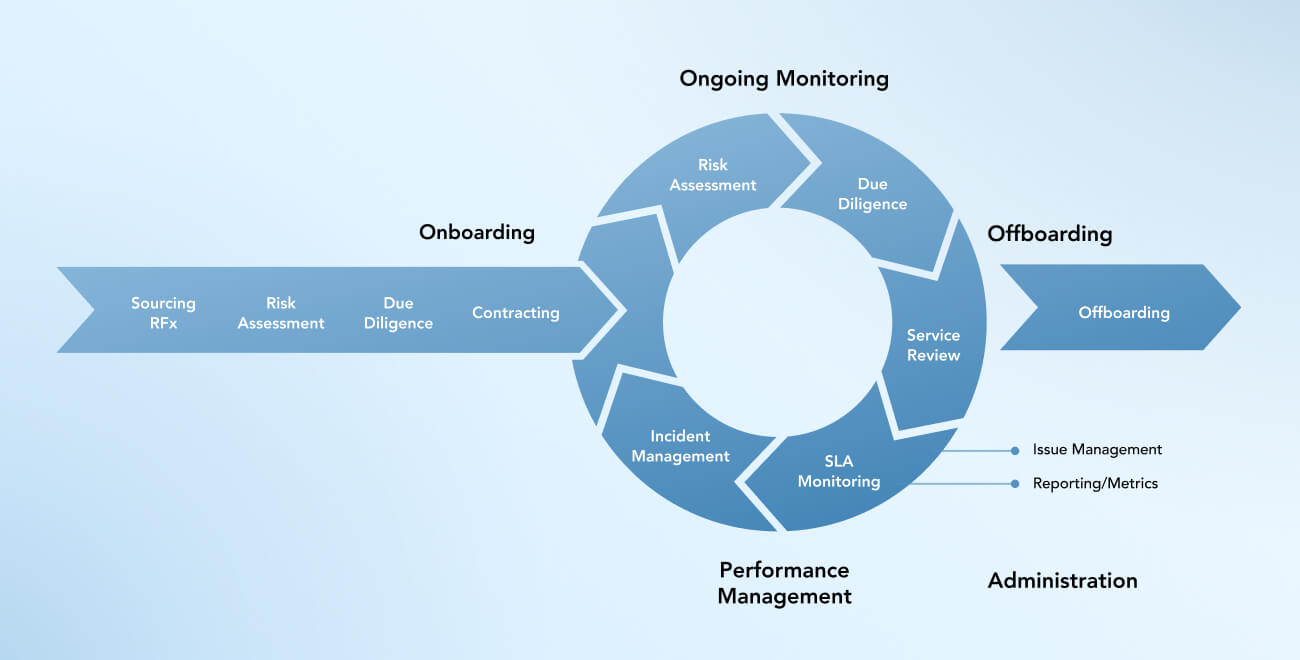
An effective TPRM program extends throughout the entire vendor lifecycle — from sourcing and onboarding through continuous monitoring and offboarding.
Modern TPRM programs are increasingly designed around centralized workflows, standardized governance, and continuous visibility into evolving vendor risk conditions.
Sourcing & RFP Processes
Third-party risk management often begins before a vendor relationship is formally established.
Organizations increasingly incorporate risk management requirements into vendor evaluations, procurement reviews, and RFP workflows to identify elevated risk earlier in the sourcing process.
Early-stage vendor screening helps organizations avoid introducing unnecessary operational, cybersecurity, or compliance exposure into the business.
Risk Assessments
Risk assessments remain one of the most resource-intensive components of vendor risk management.
Organizations often evaluate vendors across cybersecurity, operational, compliance, financial, and reputational risk domains while managing repetitive questionnaires and evidence reviews.
Traditional assessment workflows are frequently manual and difficult to scale.
Modern TPRM programs increasingly use:
- Standardized questionnaires
- Automated workflows
- Dynamic risk scoring
- AI-assisted evidence reviews
- Continuous monitoring integrations
Centralized workflows and AI-assisted review can streamline assessments by reducing administrative effort, improving consistency, and accelerating review cycles—especially when vendor volumes are high.
Due Diligence
Due diligence helps organizations validate vendor controls, certifications, policies, and supporting documentation.
This often includes reviewing:
- SOC reports
- ISO certifications
- Security policies
- Business continuity plans
- Financial documentation
- Data privacy controls
Due diligence plays a critical role in understanding whether a vendor’s practices align with organizational risk tolerance and compliance requirements.
Contracting
Contracts establish the operational, legal, and security expectations between organizations and vendors.
Organizations commonly include:
- Security requirements
- Data handling obligations
- Incident notification requirements
- Service level agreements
- Right-to-audit provisions
Strong contract governance helps improve accountability and vendor oversight across the relationship lifecycle.
Service Reviews
Vendor oversight does not end after onboarding.
Periodic service reviews help organizations evaluate vendor performance, service quality, operational effectiveness, support responsiveness, and compliance adherence.
Structured review processes help organizations identify emerging concerns earlier while improving governance consistency.
SLA Monitoring
SLA monitoring helps organizations track whether vendors are meeting operational and contractual expectations.
This often includes monitoring:
- System uptime
- Support metrics
- Response times
- Performance thresholds
- Compliance obligations
Ongoing SLA oversight improves accountability and helps organizations identify operational issues earlier.
Incident Monitoring & Continuous Monitoring
Vendor risk conditions can evolve rapidly after onboarding.
Cybersecurity incidents, operational disruptions, financial instability, compliance issues, and emerging threats can all impact vendor risk exposure over time. Organizations that rely solely on periodic assessments often struggle to maintain visibility into changing vendor conditions between review cycles.
Continuous monitoring helps organizations maintain ongoing awareness of:
- Cybersecurity incidents
- Threat intelligence indicators
- Financial health concerns
- Compliance events
- Operational disruptions
As organizations manage larger vendor ecosystems, the challenge is no longer simply collecting risk signals—it’s determining which vendors require attention first.
Modern TPRM programs increasingly rely on centralized vendor intelligence, external risk data, and dynamic risk scoring to help prioritize oversight efforts and focus resources on higher-risk vendors.
Continuous monitoring is typically supported by centralized vendor visibility and integrations with external intelligence sources—helping teams detect emerging issues and prioritize attention across the vendor population.
Remediation & Issue Management
When risks or control gaps are identified, organizations need structured remediation processes.
This often includes:
- Issue tracking
- Corrective action plans
- Escalation workflows
- Exception management
- Audit documentation
Workflow automation helps organizations improve accountability and reduce manual coordination effort.
Offboarding
Vendor offboarding is often overlooked within TPRM programs.
Organizations should ensure:
- Access is removed appropriately
- Assets are returned
- Data handling obligations are completed
- Residual risks are addressed
Structured offboarding processes help reduce long-term operational and cybersecurity risk.
Third-Party Risk Management Best Practices
Organizations with mature TPRM programs focus on creating scalable, repeatable processes that improve visibility, reduce operational burden, and strengthen governance across the vendor lifecycle.
As regulatory expectations and vendor ecosystems continue to evolve, organizations increasingly rely on automation, centralized workflows, continuous monitoring, and AI-assisted assessments to improve scalability and reduce manual effort.
Tier Vendors Based on Risk
Many organizations struggle to prioritize oversight efforts across large vendor ecosystems.
Traditional tiering models are often static and heavily manual, making it difficult to continuously reassess vendor risk as conditions change over time.
Modern TPRM programs increasingly use dynamic risk scoring, external intelligence, and continuous monitoring capabilities to improve vendor prioritization and focus resources on vendors that introduce elevated operational, cybersecurity, or compliance risk.
Some programs improve prioritization by combining internal assessment results with external risk intelligence, for example security ratings, threat signals, and incident data, to identify higher-risk vendors earlier and focus oversight where it matters most.
Standardize Assessments & Due Diligence
Many organizations struggle with inconsistent vendor reviews across departments and business units.
Standardized assessments help improve governance consistency, reduce duplicated effort, and simplify vendor oversight.
Centralized assessment workflows also help reduce vendor fatigue by minimizing repetitive information requests.
Automate Manual Workflows
Manual workflows create operational bottlenecks that slow onboarding and increase administrative burden.
Modern TPRM programs increasingly automate:
- Assessment distribution
- Evidence collection
- Approval routing
- Notifications and escalations
- Reassessment scheduling
- Remediation workflows
Automation helps organizations improve scalability while allowing risk teams to focus more attention on strategic risk management activities.
Continuously Monitor Vendor Risk
Vendor risk conditions can change rapidly after onboarding.
Organizations that rely solely on annual assessments often struggle to maintain visibility into evolving vendor risk conditions.
Continuous monitoring helps organizations identify emerging concerns earlier while improving operational resilience and vendor governance.
Align Procurement, Security, Legal & Compliance Teams
Third-party risk management requires collaboration across multiple stakeholders.
Disconnected processes often create duplicated reviews, inconsistent requirements, and onboarding delays.
Centralized workflows help improve collaboration across procurement, security, legal, compliance, and operational risk teams.
Leverage AI to Improve Scalability
AI is becoming increasingly important for organizations looking to scale vendor oversight more efficiently.
AI-assisted capabilities such as questionnaire support and automated evidence analysis can help organizations:
- Reduce repetitive assessment work
- Improve documentation analysis
- Accelerate onboarding timelines
- Improve workflow efficiency
- Reduce operational burden
Rather than replacing risk teams, AI helps automate repetitive administrative activities so teams can focus more attention on higher-risk vendors and strategic oversight.
How AI Is Transforming Third-Party Risk Management
Artificial intelligence is rapidly changing how organizations manage vendor risk at scale.
Traditional TPRM processes often rely heavily on manual reviews, repetitive questionnaires, spreadsheet tracking, and time-consuming evidence analysis. While these approaches may work for smaller vendor programs, they become increasingly difficult to scale as organizations manage larger vendor ecosystems and face growing operational demands.
AI-powered capabilities are helping organizations:
- Accelerate questionnaire completion
- Improve evidence analysis
- Identify potential risk indicators
- Automate repetitive workflows
- Prioritize higher-risk vendors
- Reduce assessment fatigue
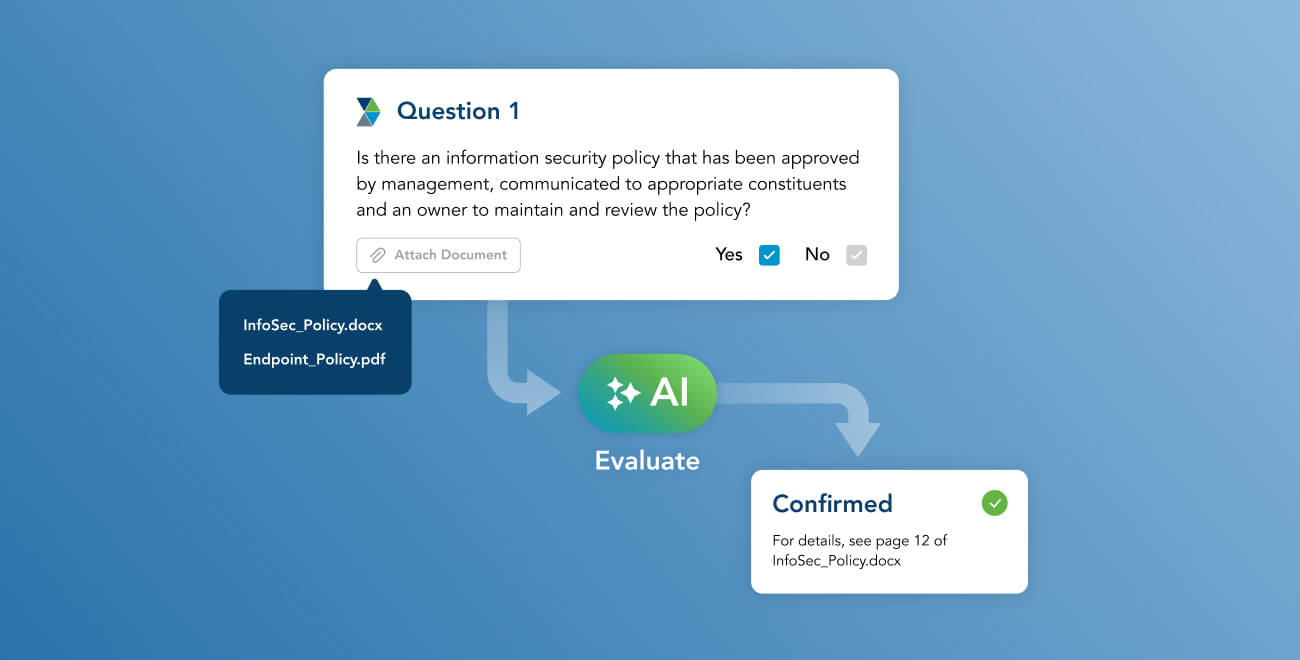
Rather than replacing risk teams, AI helps reduce operational overhead so teams can focus more attention on strategic risk management and high-risk vendor oversight.
A 2026 industry survey found that 44% of organizations currently use AI within their TPRM programs, while another 37% plan to adopt AI capabilities in the future.
This reflects a broader shift toward more intelligence-driven approaches to vendor risk management.
In practice, AI is most effective when applied to high-volume, repetitive tasks — such as pre-populating questionnaires from prior responses, summarizing control evidence, flagging gaps, and routing issues to the right owners — so teams can spend more time on judgment-based reviews and oversight.
AI-assisted workflows help organizations improve:
- Operational scalability
- Assessment consistency
- Vendor onboarding speed
- Documentation analysis
- Resource allocation
- Continuous monitoring efficiency
As vendor ecosystems continue to grow, AI is expected to play an increasingly important role in helping organizations scale TPRM programs more effectively.
Regulations & Frameworks Impacting TPRM
Regulatory expectations around third-party risk management have expanded significantly over the past several years.
Organizations are increasingly expected to demonstrate not only vendor due diligence, but also ongoing monitoring, operational resilience planning, incident response readiness, and documented governance processes across the vendor lifecycle.
This shift is driving organizations toward more centralized and continuously monitored approaches to third-party risk management.
Common frameworks and regulations impacting TPRM programs include (examples):
DORA (EU)
Requires financial entities to manage ICT third-party risk through due diligence, contractual controls, mapping of critical providers, and ongoing oversight/testing.
OCC Third-Party Relationships
Emphasizes risk-based due diligence, contract provisions, ongoing monitoring, and governance across the relationship lifecycle.
NIST
Provides guidance for assessing and improving cybersecurity controls; often used to structure vendor security questionnaires and evidence review.
ISO/IEC 27001
Information security management standard; vendor certifications can support due diligence and control validation.
SOC 2
Independent assurance report on controls relevant to security, availability, confidentiality, processing integrity, and privacy; commonly requested during due diligence.
GDPR
Establishes obligations for controllers/processors, data processing agreements, breach notification expectations, and oversight of subprocessors.
HIPAA
Requires covered entities and business associates to protect PHI and implement appropriate safeguards, including third-party controls.
APRA CPS 230 (AU)
Raises expectations for operational risk management and service provider arrangements, including material provider governance and monitoring.
Operational resilience requirements
Push organizations to identify critical services, map dependencies, test continuity plans, and manage concentration and single points of failure.
Operational resilience regulations in particular are reshaping how organizations evaluate third-party dependencies and critical service providers.
Organizations increasingly need centralized visibility into:
- Vendor relationships
- Critical services
- Dependency mapping
- Incident response processes
- Ongoing monitoring activities
What to Look for in Third-Party Risk
Management Software
As vendor ecosystems continue to grow, many organizations are replacing spreadsheet-driven workflows and disconnected systems with centralized TPRM platforms.
Modern third-party risk management software helps organizations improve scalability, standardize assessments, automate workflows, and improve visibility into vendor risk conditions across the lifecycle.
Five Reasons to Automate TPRM
The right software doesn't just digitize your existing process — it changes what's possible. Organizations that automate third-party risk management typically see gains in five areas:
Consistency
Predefined workflows keep every stakeholder — procurement, security, legal, business owners — aligned in real time, so the same assessment standard applies to every vendor, every time.
Speed
What used to take weeks of back-and-forth email can happen in days, freeing risk teams to focus on judgment calls instead of chasing paperwork.
Scalability
A growing vendor ecosystem doesn't have to mean a growing risk team — automated workflows absorb volume that would otherwise require proportional headcount.
Clean data
Centralized, structured data means real visibility through dashboards and reporting, rather than reconciling a dozen spreadsheets to answer a simple question.
Trust
A faster, more consistent, more transparent process signals to vendors — and to your own leadership and auditors — that third-party risk is being taken seriously.
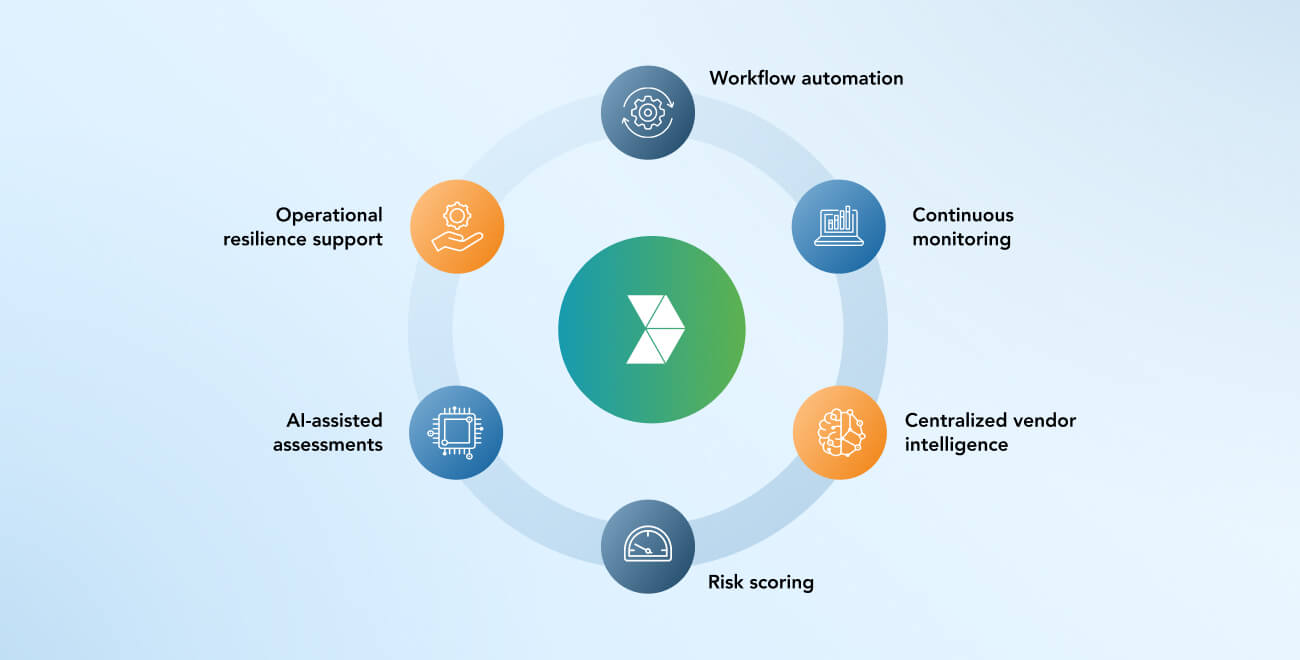
Organizations increasingly look for platforms that combine:
- Workflow automation
- Continuous monitoring
- Risk scoring
- Centralized vendor intelligence
- AI-assisted assessments
- Operational resilience support
Key capabilities often include:
- Vendor onboarding workflows
- Risk assessments and due diligence
- Workflow automation
- Continuous monitoring
- Vendor risk scoring
- Reporting and dashboards
- Remediation tracking
- AI-powered assessment automation
- Cross-functional collaboration
When evaluating software, focus on fit for your program’s size and regulatory context, configurability of workflows and scoring, ease of vendor participation, quality of reporting, integration options (GRC, IAM, procurement, ticketing), and the ability to support both periodic assessments and continuous monitoring over time.
Organizations should look for TPRM platforms that support workflow automation, continuous monitoring, centralized vendor visibility, AI-assisted assessments, operational scalability, and cross-functional collaboration.

Define governance (roles, approvals, risk acceptance)

Establish tiering criteria and assessment frequency by risk level

Standardize questionnaires and evidence expectations

Embed controls in contracts (security, privacy, SLAs,
right-to-audit)

Add continuous monitoring for critical / high-risk vendors

Track remediation to closure with clear owners and deadlines

Measure program performance (cycle time, coverage, exceptions, outcomes)
Over time, organizations that combine clear governance with automation, consistent evidence review, and
continuous monitoring are better positioned to reduce risk, accelerate onboarding, and demonstrate audit-ready
oversight across their vendor ecosystem.
Frequently Asked Questions
Third-party risk management is the process of identifying, assessing, monitoring, and mitigating risks introduced by vendors, suppliers, contractors, and external business relationships.
TPRM helps organizations reduce cybersecurity, operational, compliance, financial, and reputational risk associated with third-party relationships while improving operational resilience and governance.
The TPRM lifecycle typically includes sourcing, risk assessments, due diligence, contracting, service reviews, SLA monitoring, continuous monitoring, remediation, and offboarding.
AI is helping organizations automate repetitive assessment activities, accelerate evidence analysis, improve workflow efficiency, and reduce operational burden across vendor risk management programs.
Organizations should look for software that supports workflow automation, standardized assessments, evidence collection, continuous monitoring, risk scoring, remediation tracking, reporting, and cross-functional collaboration.