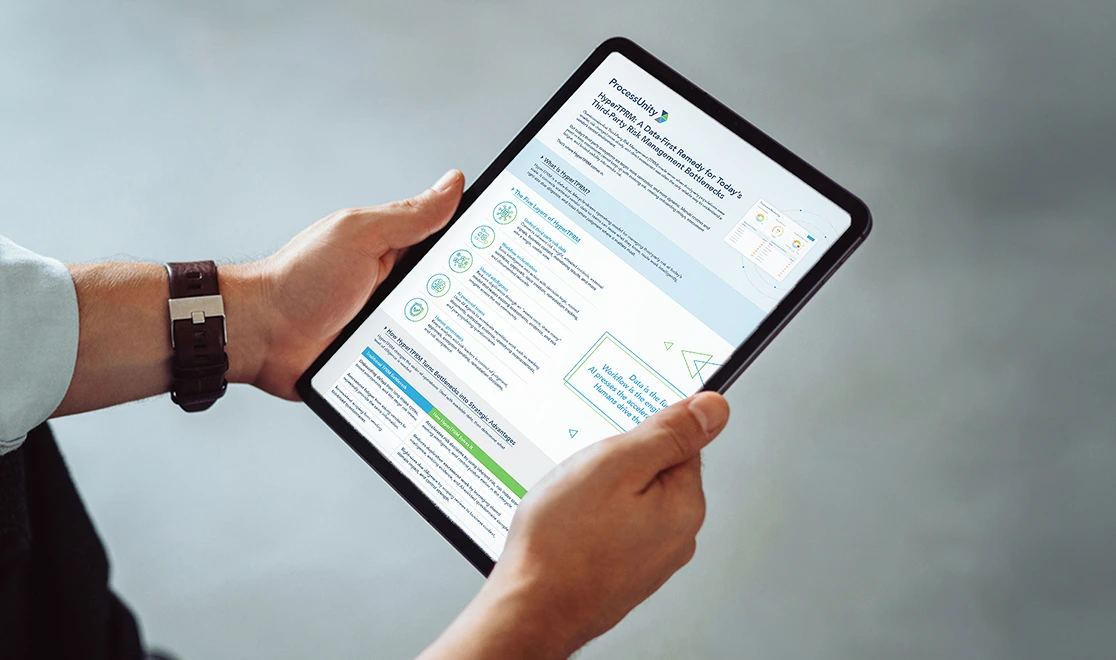
HyperTPRM: A Data-First Remedy for Today’s Third-Party Risk Management Bottlenecks
Today’s third-party ecosystems are larger, more connected, and more dynamic than ever. Yet many TPRM programs still rely on manual assessments built for simpler times, resulting in onboarding delays, assessment fatigue, and fragmented visibility into vendor risk. This one-pager explores a different approach to modern vendor management: HyperTPRM, a data-first, lifecycle-driven operating model for managing […]

Your TPRM Program Doesn't Need a Smarter Chatbot. It Needs Specialists.
Two third-party risk teams are piloting AI tools in the same quarter. The first team points a general-purpose assistant at the whole assessment process. It reads the evidence, flags the gaps, and drafts the findings. The second gives an agent exactly one job: Validate Certificates of Insurance against the program’s coverage thresholds. A year later, […]

ProcessUnity Makes DDQ AutoAssist Available Free to Every Third Party on the Global Risk Exchange
AI turns the evidence and attested control data maintained by third parties in the Global Risk Exchange into drafted answers for any customer questionnaire, at no cost. CONCORD, Mass. — August 19, 2026 — ProcessUnity, the Third-Party Risk Management (TPRM) company, today introduced DDQ AutoAssist, a ProcessUnity Global Risk Exchange feature that automatically drafts third […]

Why a Cybersecurity Assessment Isn’t Enough: The Case for Multi-Domain Third-Party Risk Management
On July 19, 2024, a faulty content update from CrowdStrike crashed roughly 8.5 million Windows devices, grounding flights, halting hospital admissions, and freezing point-of-sale systems worldwide. It remains one of the largest IT outages in history. Here’s the uncomfortable part for risk teams: it wasn’t a breach. No control failed in the way a security […]
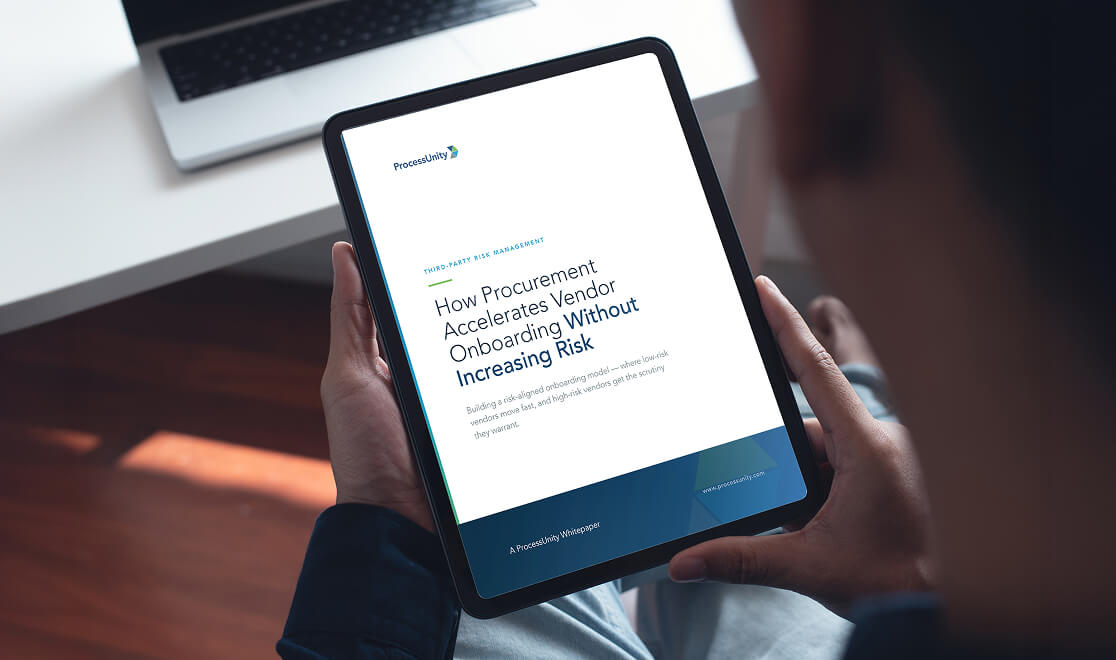
How Procurement Accelerates Vendor Onboarding Without Increasing Risk
The business needs vendors activated now. Security, legal, and compliance need time to assess the risk. Most organizations resolve that tension unsatisfactorily. Either every vendor moves at the pace of the most complex review, or vendors get waved through and the consequences get dealt with later. Neither path works, and both create exposure of a […]

ProcessUnity Third-Party Risk Management Platform Demo
Vendor ecosystems are growing faster than TPRM teams can keep pace with, and it shows. While over half of risk leaders believe their assessments reduce breach likelihood, organizations still face a third-party security incident roughly once a month. Traditional, manual TPRM simply wasn’t built for today’s scale.