Streamline the Third-Party Lifecycle with Risk Data Intelligence
Significantly improve clarity and speed during onboarding, due diligence, and continuous monitoring via access to the world’s largest and most sophisticated controls-based third-party dataset.
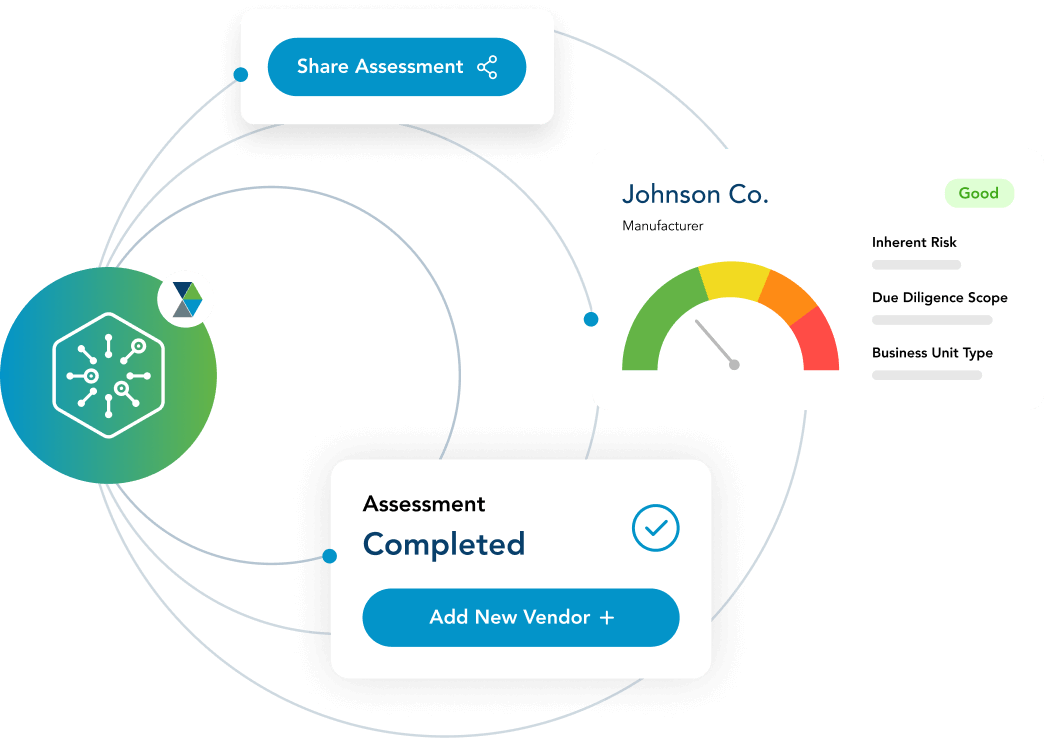
Turn TPRM Data Challenges into Opportunities
Managing an effective Third-Party Risk Management (TPRM) program is a significant challenge for any organization. As your network of third-party vendors expands, so do the complexities of assessing and mitigating their risks. Common challenges include:
- Growing volumes of third parties to assess and monitor
- Limited internal resources to handle increasing reviews
- Difficulty maintaining visibility into evolving risks
- Inconsistent or incomplete data from third parties
- Conflicting internal (vendor self-attested) signals with external (ratings providers, perimeter scanning)
Instead of being bogged down by manual assessments and fragmented data, empower your team with proprietary controls-based intelligence from ProcessUnity’s Global Risk Exchange.
Prioritize Risk Early. Reduce Assessment Work.
Extend Monitoring Coverage.
Via the Global Risk Exchange, ProcessUnity Risk Index provides you with actionable risk summaries and drilldown, control-level detail so that your team can:
Prioritize Risk Early
Use the ProcessUnity Risk Index score to immediately prioritize vendors during onboarding, drastically reducing the time and effort involved in initial pre-contract due diligence.

Reduce Assessment Work
Leverage the ProcessUnity Risk Index score and Control Domain Analysis to target assessments at the right level for the appropriate vendors.

Extend Monitoring Coverage
Combine external threat intelligence and perimeter scanning with internal controls intelligence and expert associations to Common Weakness Enumerations (CWEs) and MITRE ATT&CK kill chains to get relevant, focused alerts on domains of concern.
See How the Global Risk Exchange Accelerates Vendor Assessments
Request a DemoGlobal Risk Exchange Highlights

Controls-Based Intelligence
The Global Risk Exchange is powered by 18,000+ control attestations, 370,000+ vendor profiles, predictive analytics, firmographic and technographic data, and expert associations to CWEs and MITRE ATT&CK techniques.
ProcessUnity Risk Index
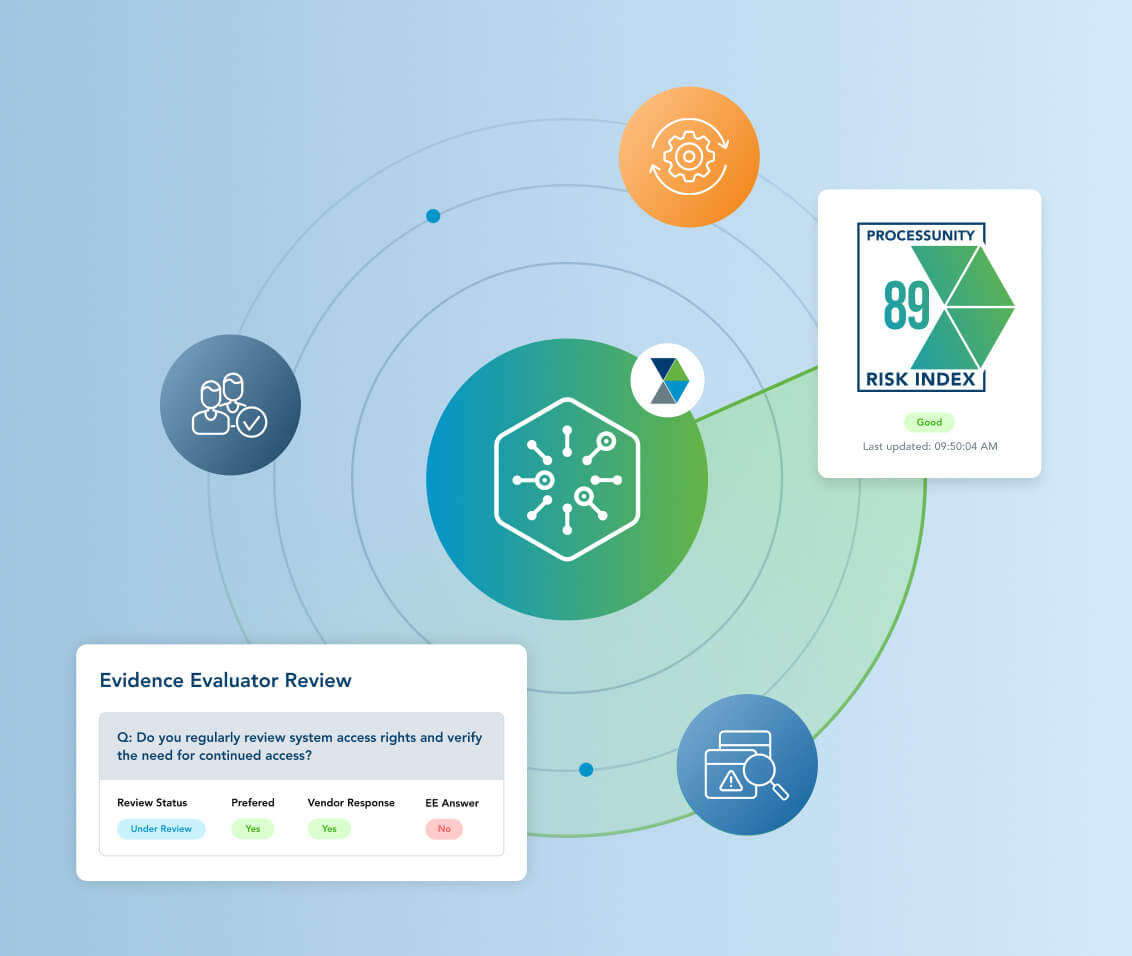
Powered by the Exchange’s controls-based intelligence, ProcessUnity Risk Index is an actionable risk rating that combines internally informed control data with externally observed risk signal.

Assessment Autofill
AI-powered Assessment Autofill pre-populates a vendor’s cybersecurity assessment and control attestations by analyzing submitted control documentation such as SOC 2 reports, ISO certifications, and internal policies and procedures.

ProcessUnity TPRM Platform Integration
Global Risk Exchange data is deeply embedded into the TPRM lifecycle at key decision points during onboarding, due diligence, and continuous monitoring.
Relevant TPRM Data and Powerful Insights to Extend Your Team
Improve Third-Party Engagement
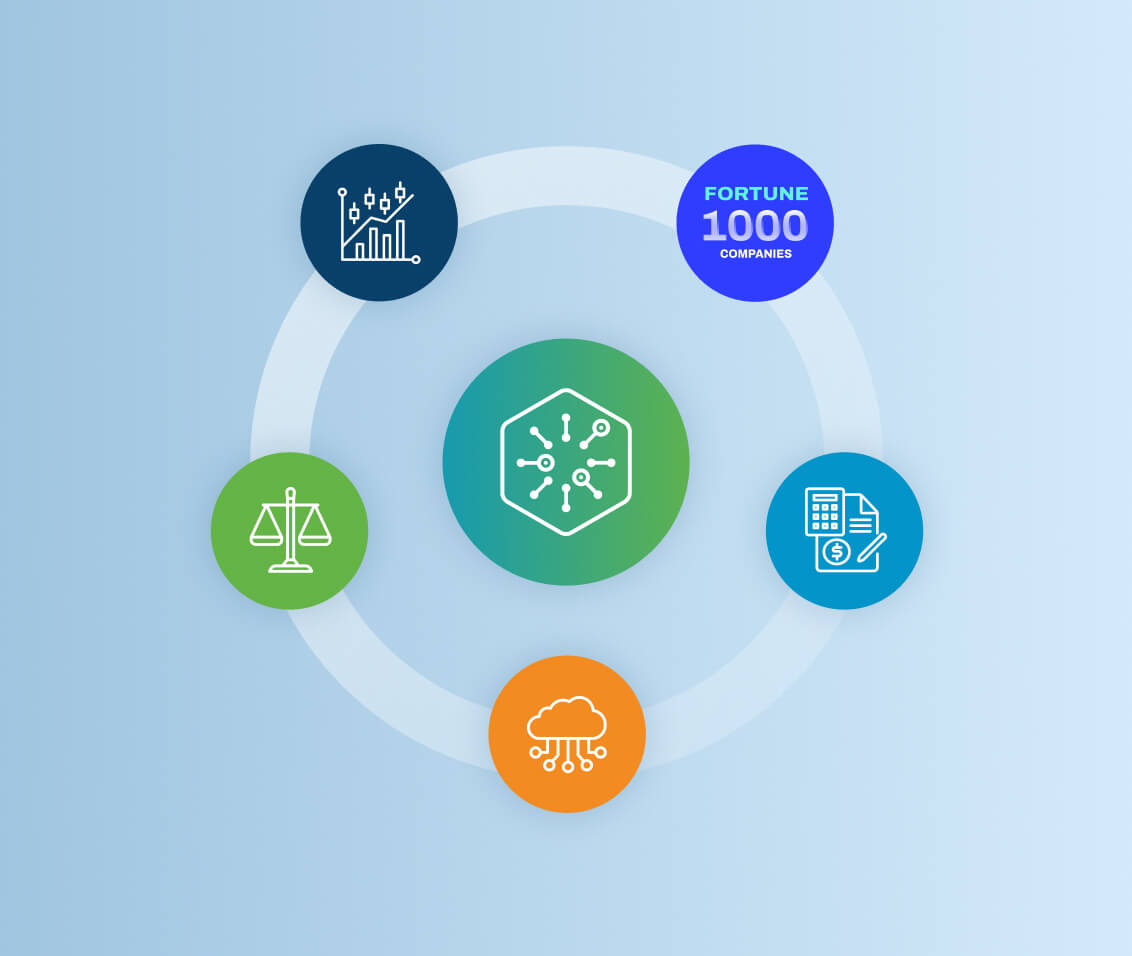
The Global Risk Exchange is built on participation from over 18,000 vendors, including large, hard-to-assess third parties that typically don’t respond to assessment and information requests. Via the Exchange, third-party vendors actively participate in their ProcessUnity Risk Index score, ensuring that their Risk Index profile is representative of their true risk posture.
Third parties in the Global Risk Exchange include:
- 80% of Fortune 1000 companies
- 4 of the top 5 cloud providers
- 12 of the top 20 law firms
- 4 of the top 5 private equity firms
- The top 4 accounting firms
Power Data Action
Combine the power of workflow and data at every stage in the third-party lifecycle. Global Risk Exchange data via ProcessUnity Risk Index scores and control-level detail are deeply embedded into ProcessUnity’s TPRM platform during:
Onboarding: Pre-populate vendor intake with firmographic information and prioritize vendors for initial pre-contract due diligence with Risk Index scores.
Due Diligence: Perform an early internal review of controls, dynamic scoping, and assessment prep-population. Leverage ProcessUnity’s AI-driven Evidence Evaluator to review and validate vendor control evidence.
Continuous Monitoring: Get filtered, relevant notifications about meaningful changes in risk posture such as score changes and breach notifications, then leverage workflow steps to take immediate remedial action.
See Your Potential Savings Before You Take a Demo
Answer 5 questions about your current TPRM program. We’ll model your five-year value potential from adopting a HyperTPRM approach, including time recovered, cost avoided, and risk reduction — and generate a personalized report your team can use to build a business case internally.
Calculate Your ROI Now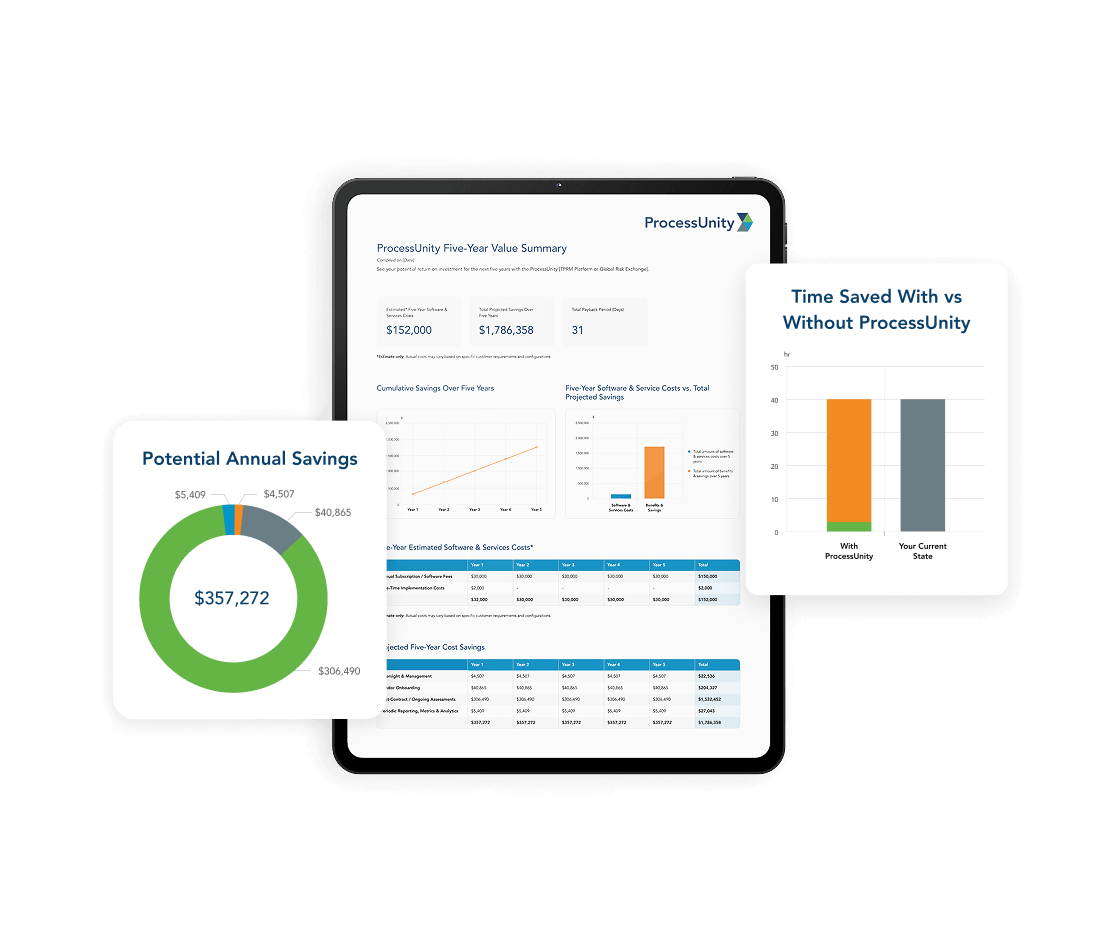
You Might Be Interested In

ProcessUnity Third-Party Risk Management Platform Demo
Vendor ecosystems are growing faster than TPRM teams can keep pace with, and it shows. While...

ProcessUnity Risk Index
Static questionnaires and generic external-only ratings each tell just part of the risk story, leaving teams...
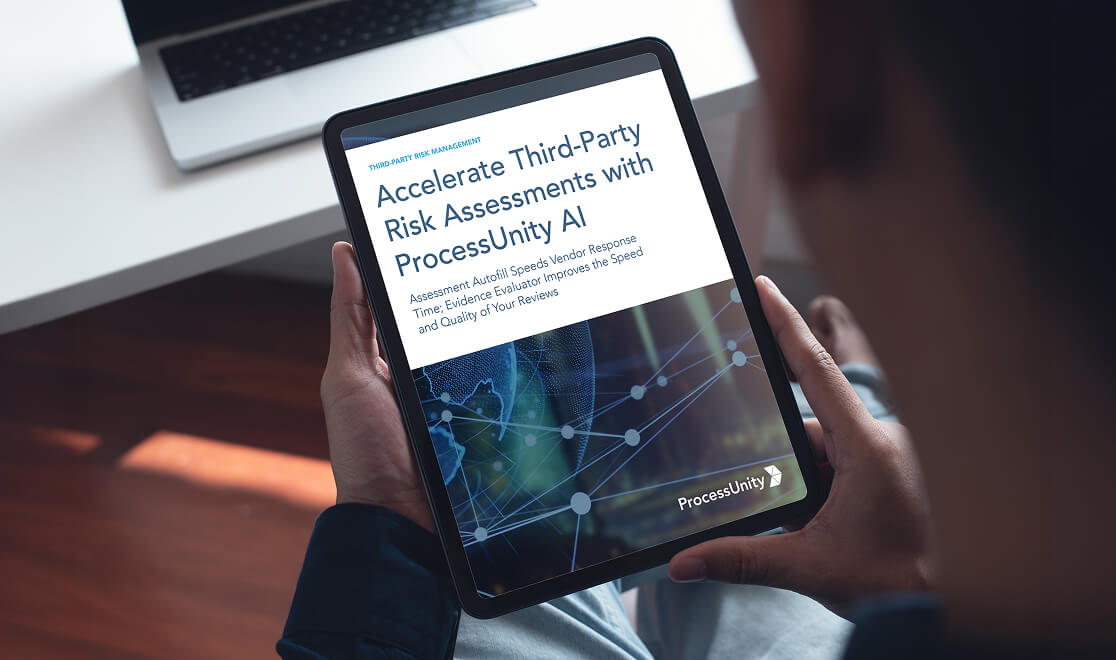
ProcessUnity Assessment Autofill & Evidence Evaluator
Due diligence questionnaires slow everyone down. Analysts spend hours combing through submitted evidence, while third parties...

Scaling Trust with Third-Party Data Exchanges: Google Cloud’s Updated Global Risk Exchange...
As third-party risk management (TPRM) programs continue to evolve, organizations are under increasing pressure to assess...
The Data Problem in Third-Party Risk Management
Organizations experience an average of 12 third party-related security incidents per year—not because they lack data,...

Verizon Completes Annual Refresh of Global Risk Exchange Data: Bringing Customers Fresh...
ProcessUnity is pleased to announce that Verizon updated its Global Risk Exchange Assessment, bringing refreshed data...
Frequently Asked Questions
A third-party risk assessment is the process of evaluating a third party’s potential risk to the business across areas such as cybersecurity, regulatory compliance, and operational practices to ensure they align with your organization’s standards.
The five phases of third-party risk management are:
- Planning and Scoping – Identify critical third parties and define risk management goals.
- Due Diligence and Selection – Assess third-party risk before onboarding.
- Contract Negotiation – Set clear expectations for compliance, security, and performance.
- Ongoing Monitoring – Continuously assess third-party risk and performance.
- Termination and Transition – Manage offboarding with plans for continuity and compliance.
A third-party risk assessment exchange contains validated risk assessments, completed questionnaires, vendor risk profiles, and supporting documentation. It provides fast, reliable access to third-party risk data, even for hard-to-reach third parties, and accelerates risk decision-making.
Monitoring third-party risk involves continuous assessments, integration of external risk data, real-time alerts, and regular third-party performance reviews to identify and address emerging threats proactively.
Here’s how to perform a third-party risk assessment:
- Define the scope and objectives of your assessment based on the third party’s inherent risk levels.
- Gather third-party information through tailored questionnaires.
- Leverage a third-party risk assessment library to systematically evaluate and verify specific risk areas.
- Analyze assessment results to identify potential vulnerabilities.
- Develop targeted remediation plans to address identified risks.
- Document the process for future reference and compliance purposes.
Next Steps:
Schedule a ProcessUnity Platform Demo
Our team is here to show you how forward-thinking organizations are elevating their
Third-Party Risk Management programs and practices to maximize risk reduction. Start
your journey with ProcessUnity today.
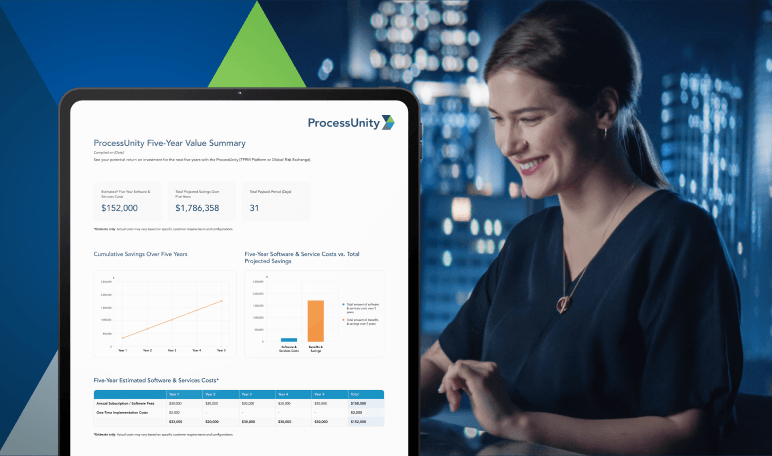
Calculate Your Potential Savings with ProcessUnity
Build a business case to uplevel your Third-Party Risk Management program. Answer a few short questions and generate your custom savings report.