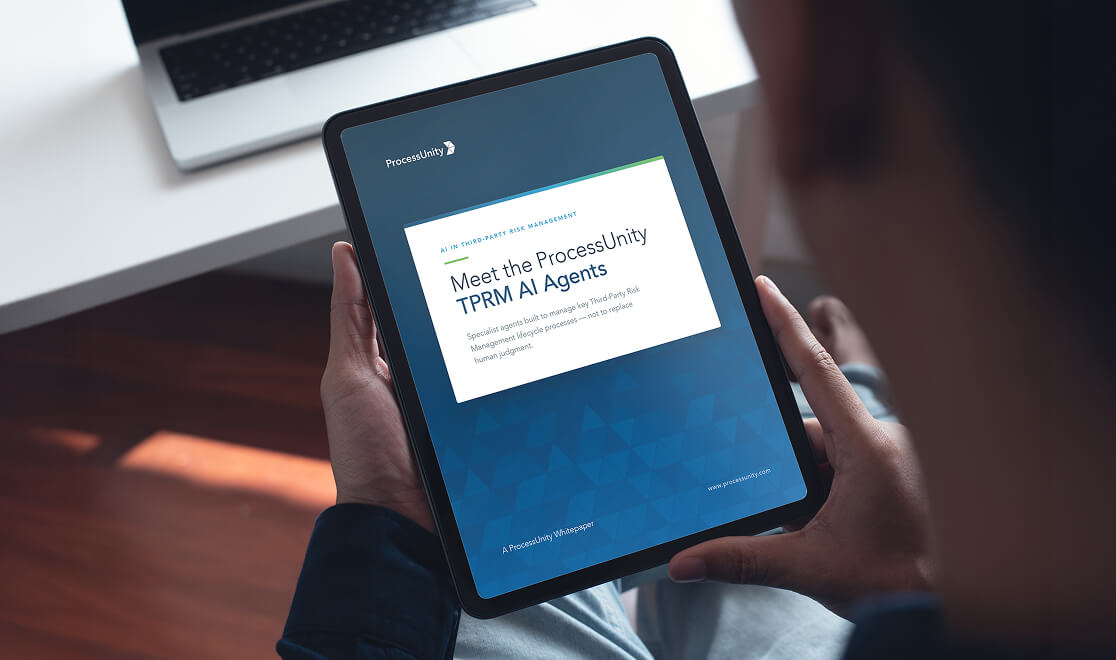
Meet the ProcessUnity TPRM AI Agents
Your strongest analyst shouldn’t spend Tuesday morning cross-referencing SOC 2 exceptions by hand. But that’s where the work goes when a Third-Party Risk Management (TPRM) program runs on manual labor: Vendor requests sit in the intake queue, certificates of insurance expire unnoticed, and findings go quiet while board decks eat up days that should have […]
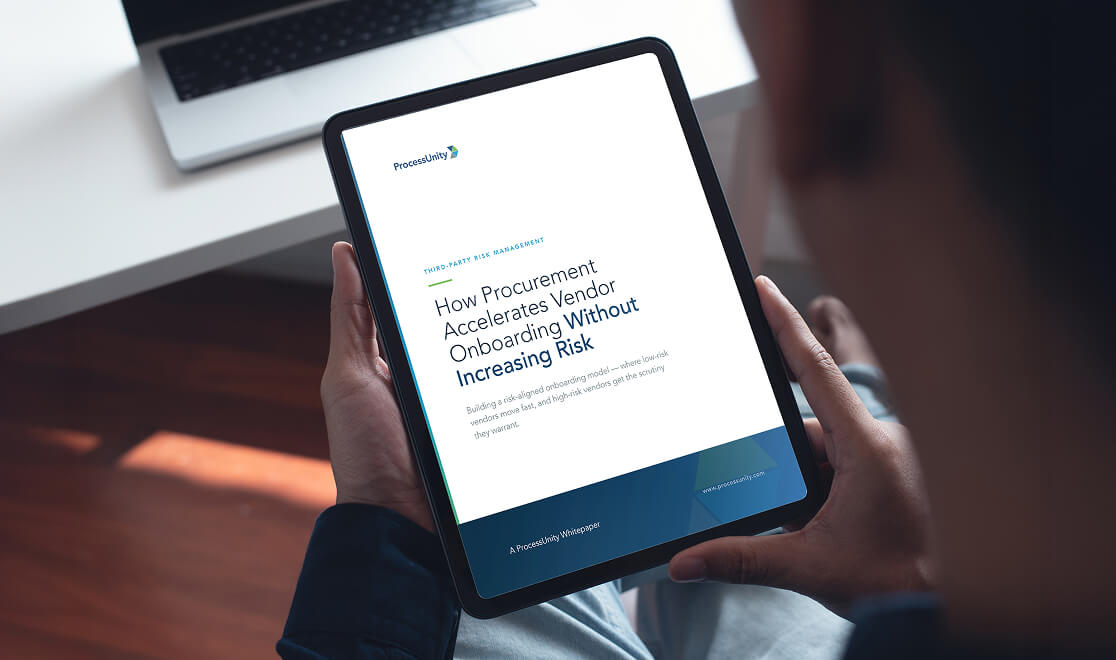
How Procurement Accelerates Vendor Onboarding Without Increasing Risk
The business needs vendors activated now. Security, legal, and compliance need time to assess the risk. Most organizations resolve that tension unsatisfactorily. Either every vendor moves at the pace of the most complex review, or vendors get waved through and the consequences get dealt with later. Neither path works, and both create exposure of a […]

How to Incorporate AI to Transform Your Third-Party Risk Management Program
Organizations experience an average of 12 third party-related security incidents per year—not because they lack data, but because the data they have doesn’t connect. Point-in-time assessments, lack of shared context, and misaligned timelines create a dangerous illusion: that third-party risk is understood, when in reality it’s only partially visible.

The Data Problem in Third-Party Risk Management
Organizations experience an average of 12 third party-related security incidents per year—not because they lack data, but because the data they have doesn’t connect. Point-in-time assessments, lack of shared context, and misaligned timelines create a dangerous illusion: that third-party risk is understood, when in reality it’s only partially visible.
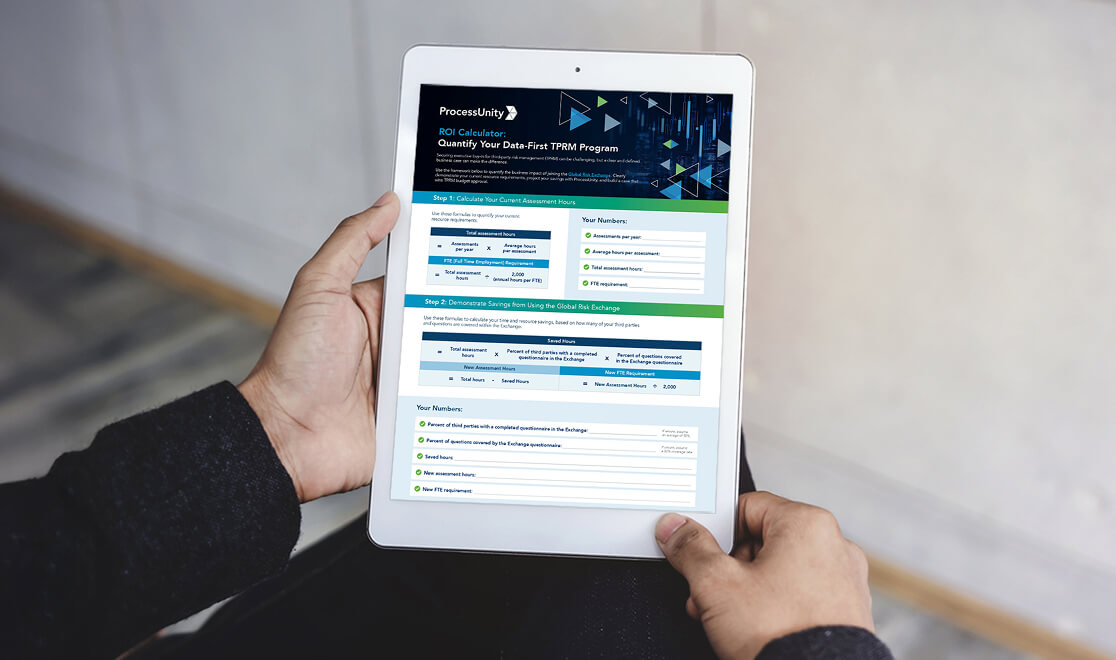
ROI Calculator: Quantify Your Data-First TPRM Business Case
Struggling to win executive approval for your third-party risk management (TPRM) program? Without defined and trusted data, it can be tough to prove the value of modernizing assessments. That’s why we created the ProcessUnity ROI Calculator.
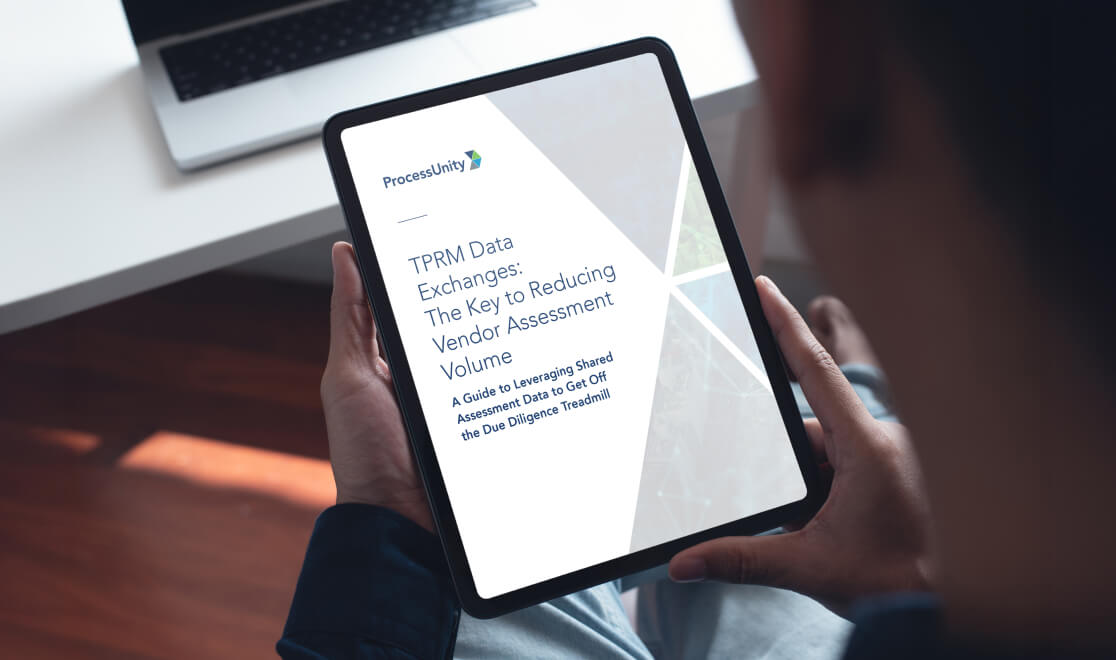
TPRM Data Exchanges: The Key to Reducing Vendor Assessment Volume
Third-Party Risk Management (TPRM) is reaching a breaking point. As vendor ecosystems expand, business demands increase, and regulatory scrutiny intensifies, TPRM teams are being asked to do more with the same resources, widening the gap between expectations and capacity.